TPO for Johnstown Warehouses
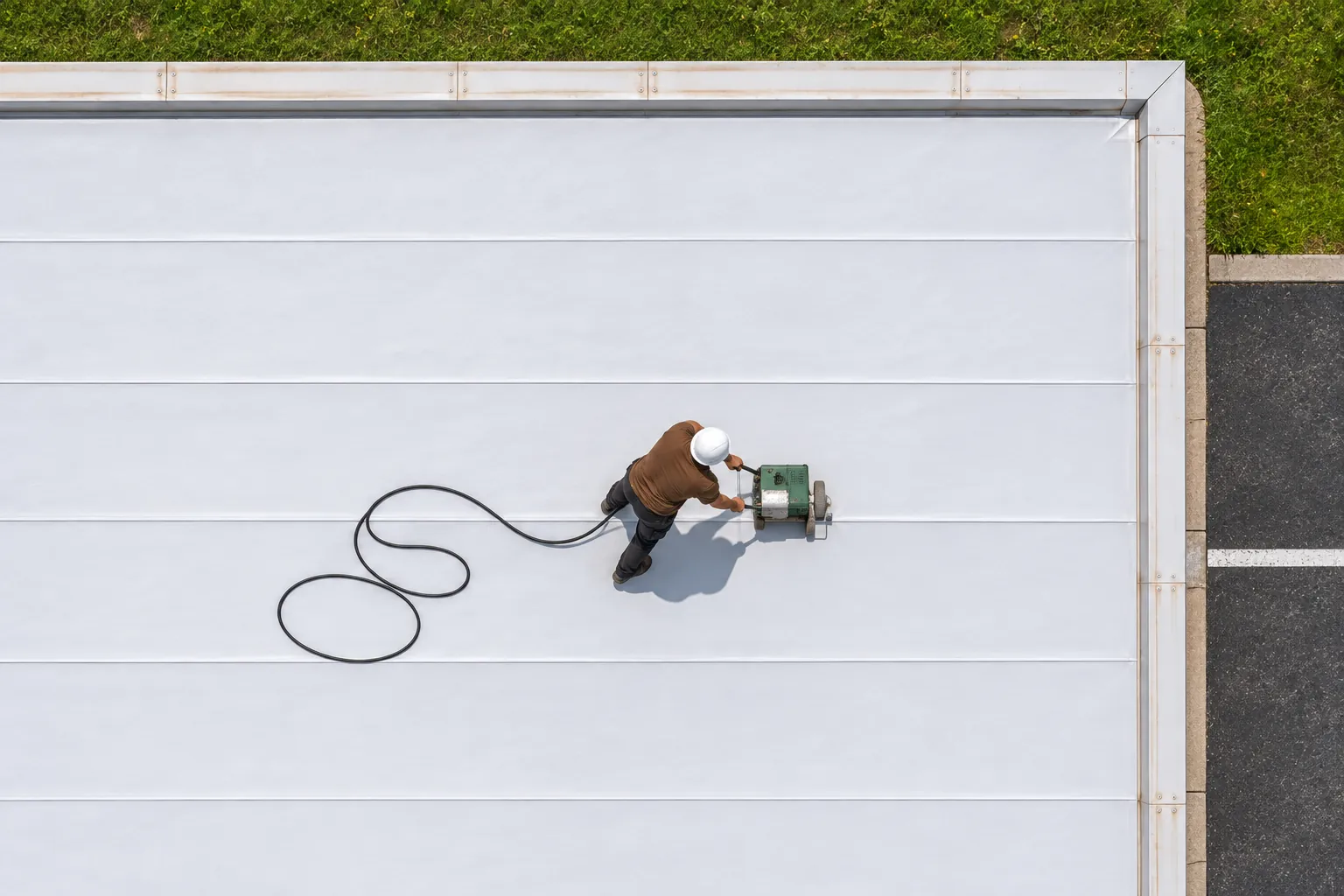
Covers seams, drains, curbs, flashing and deck.Hot-air welded white membrane for wide warehouse roofs and offices, with tapered board around every interior drain and new flashing at each curb.
TPO roofing details
Johnstown commercial roofing work from our Altoona base: we replace TPO, EPDM, and metal roofs on shops, plants, and warehouses in the city.
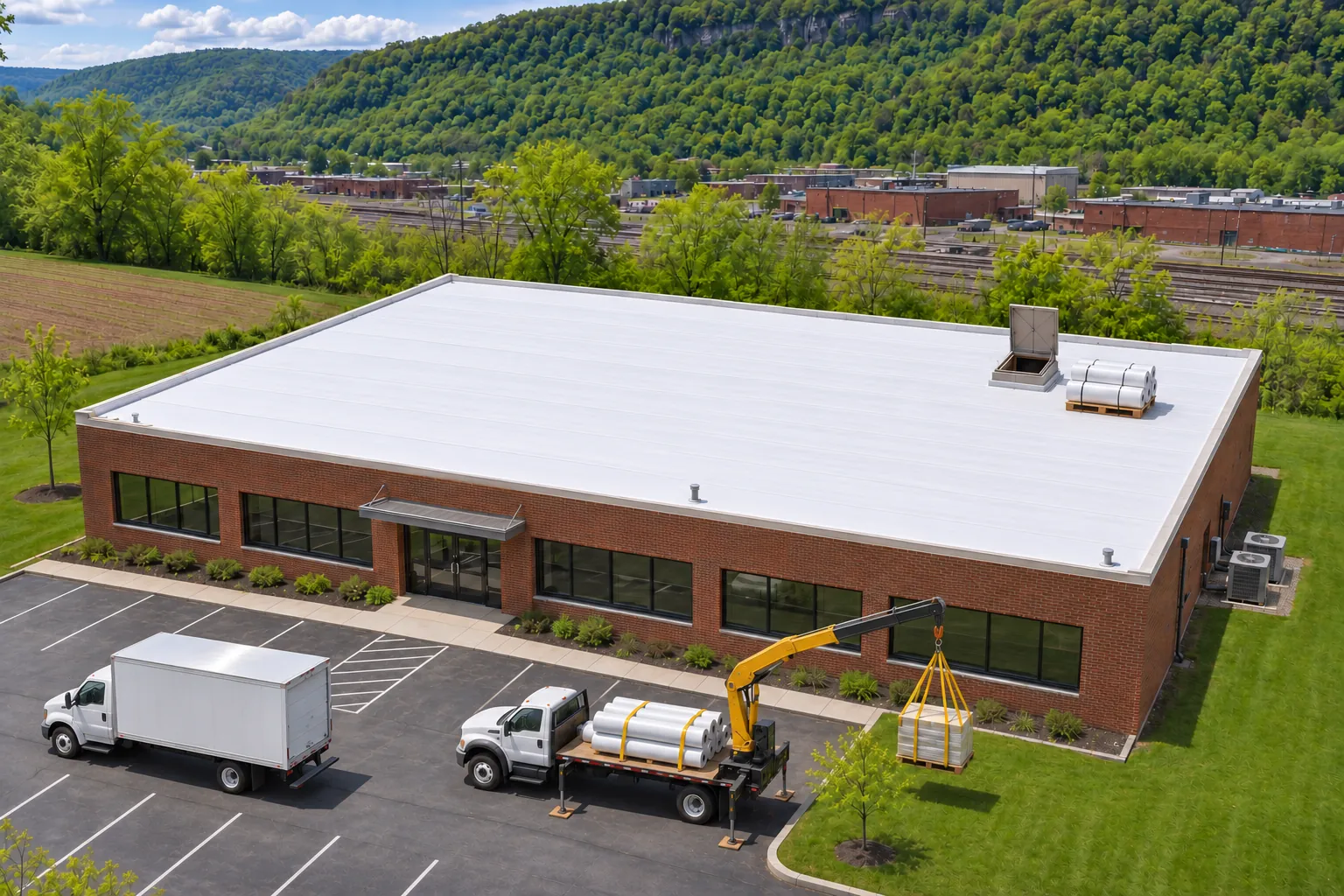
Johnstown commercial roofing on a working repair shop starts with the delivery calendar, because cranes, trucks, and roofing material all want the same yard.
We walk the yard with whoever runs receiving and mark the routes large loads take to the doors. Roof staging, the crane pad, and the debris dumpster then go where they stay clear of those routes on delivery days.
The roof sequence stays flexible. If a section opens and the deck needs more repair than planned, or rain moves in, the next delivery still gets through, and that section closes before anyone moves on.
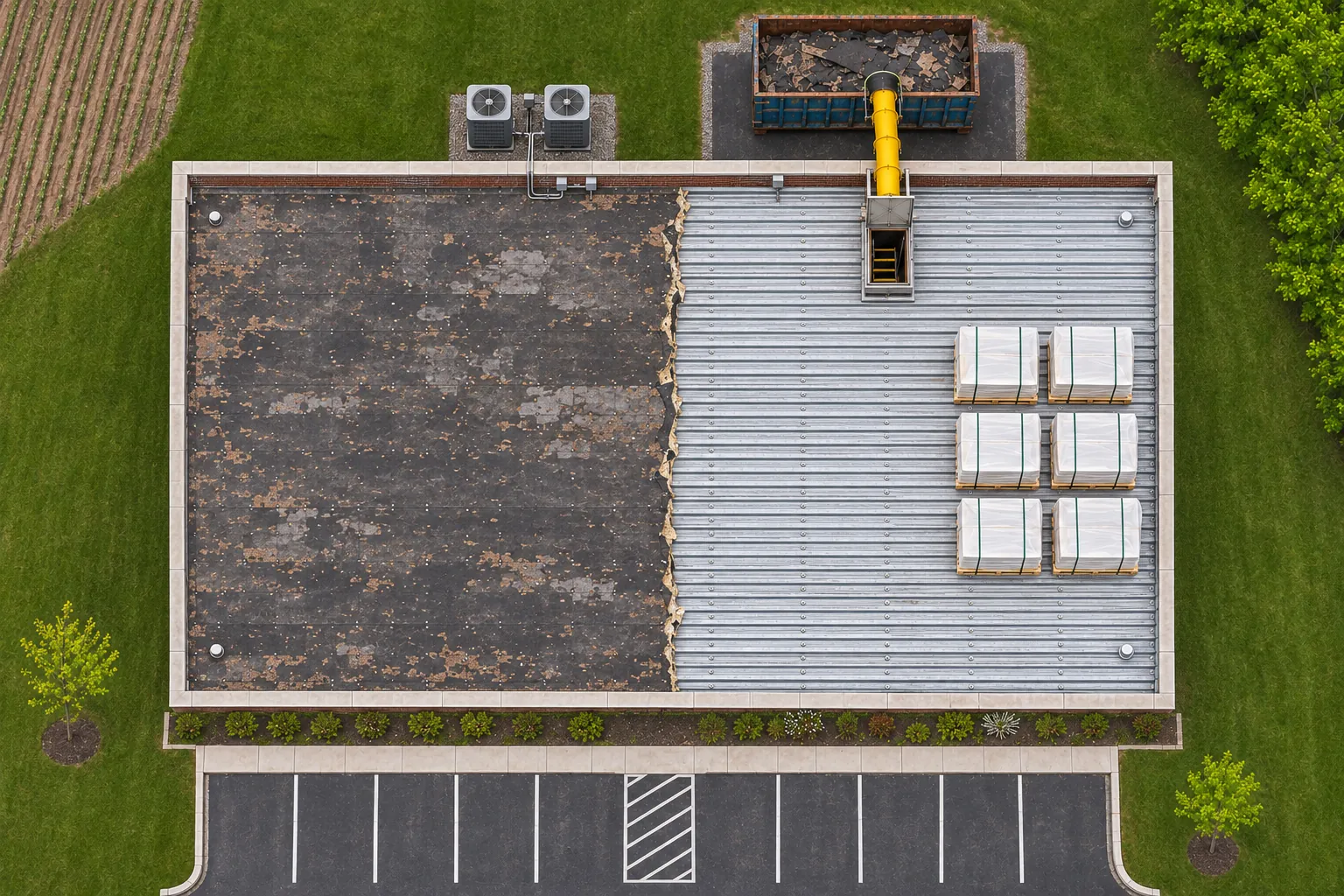
The same four systems we install in Altoona, matched to the shop or plant in front of us.
Hot-air welded white membrane for wide warehouse roofs and offices, with tapered board around every interior drain and new flashing at each curb.
TPO roofing details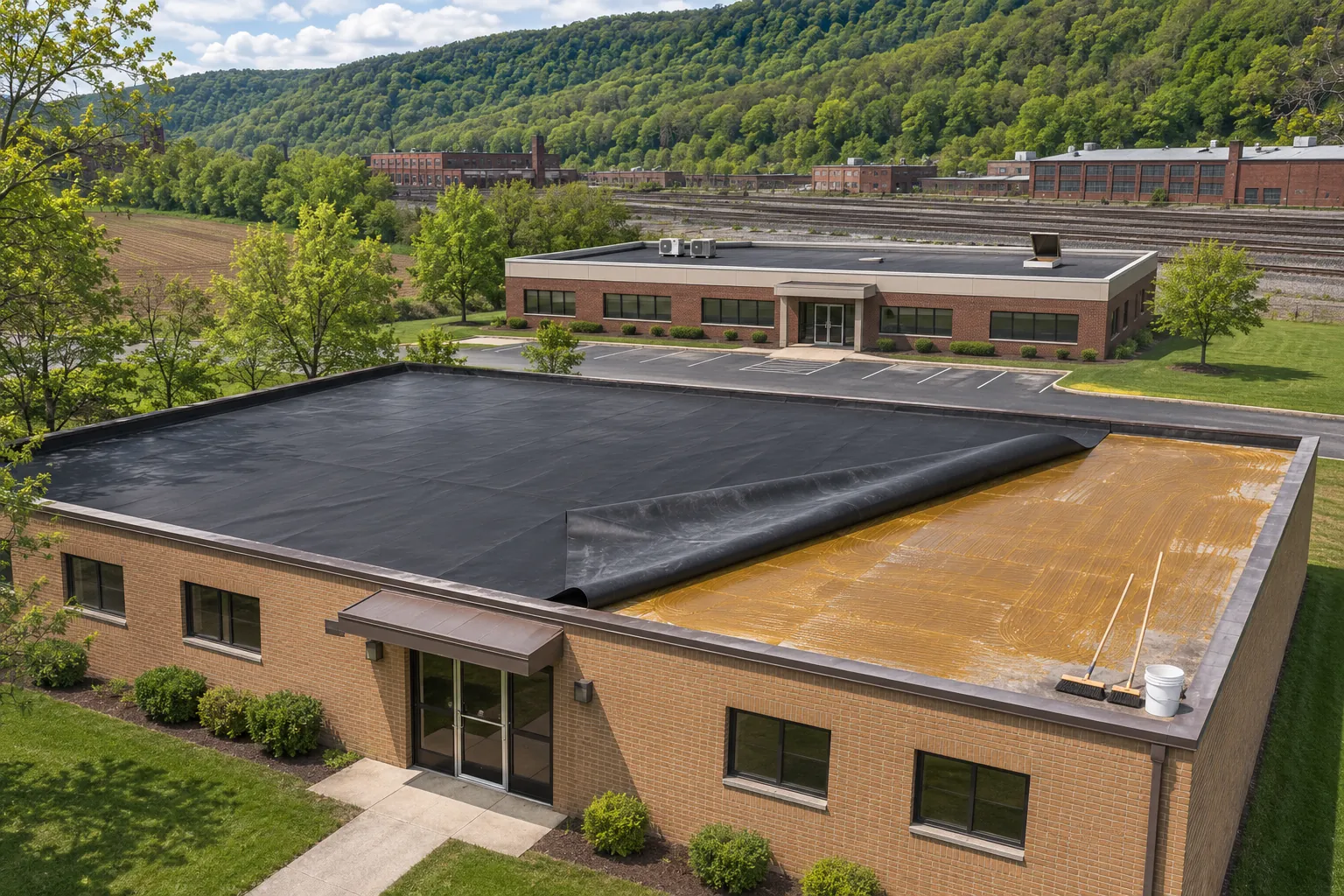
Rubber sheets that tolerate movement in older masonry shops, glued down and finished with taped laps and fresh wall flashing.
EPDM roofing details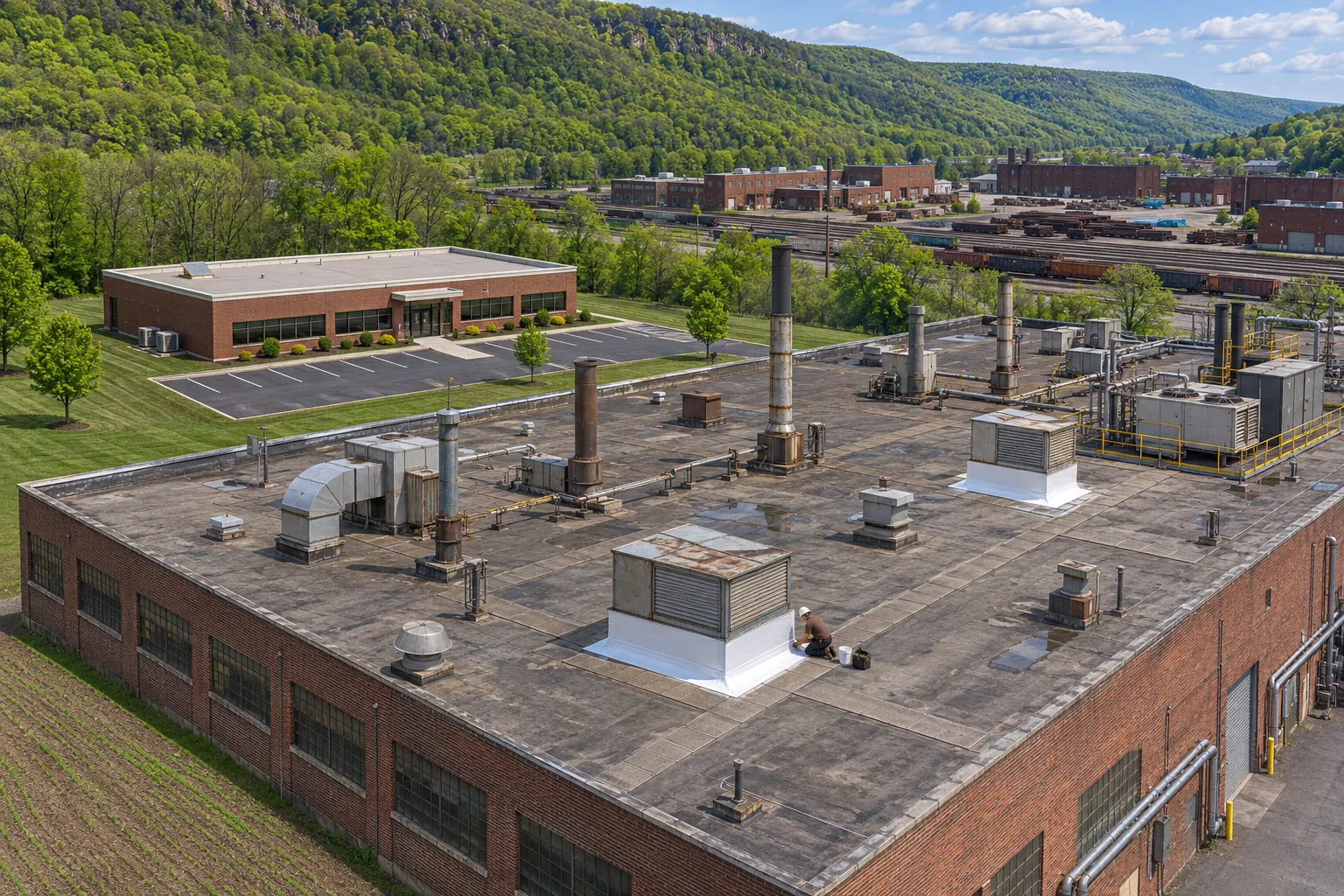
Phased tear-off over repair bays and production lines, with protection below and each section closed at the end of the shift.
Industrial roofing details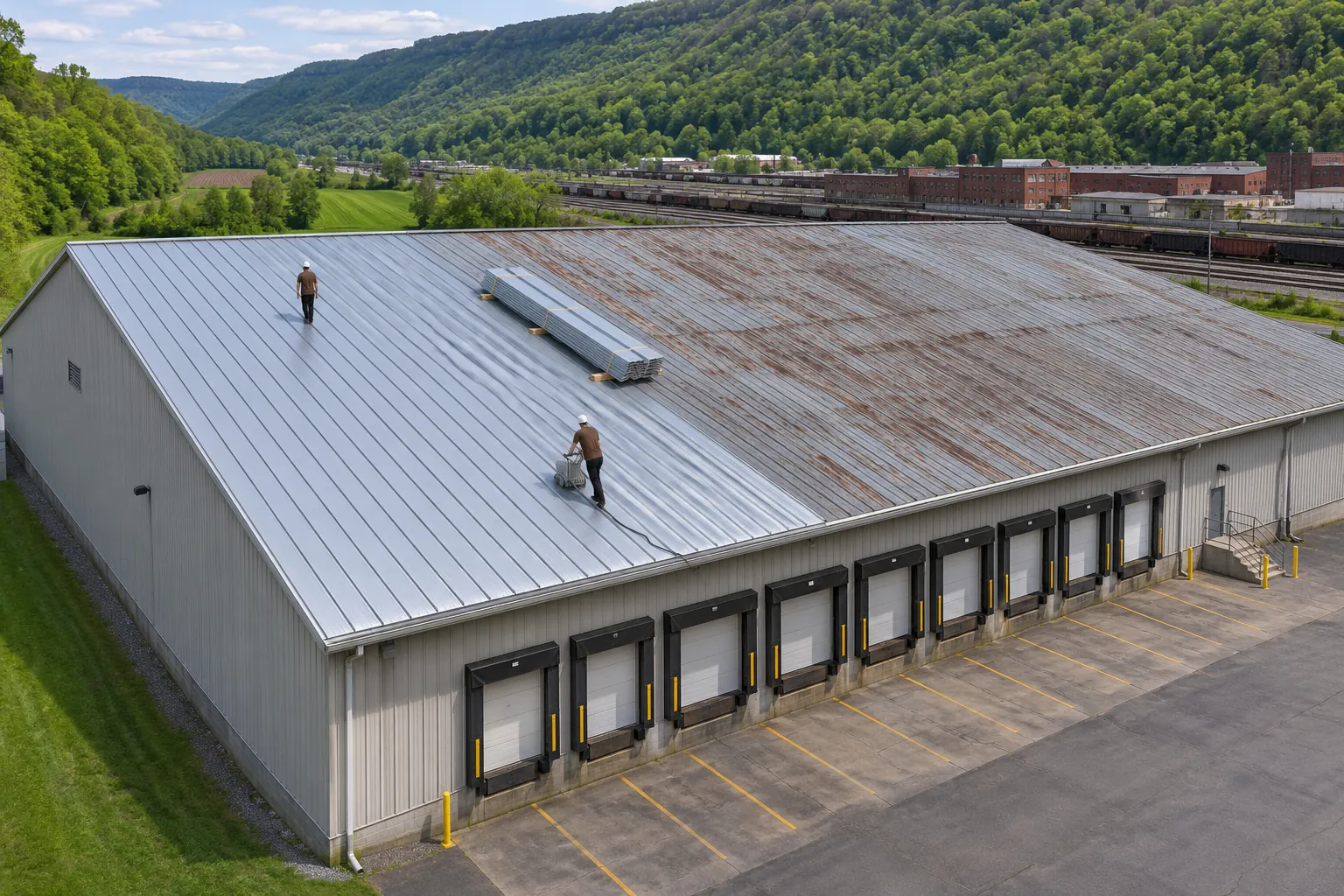
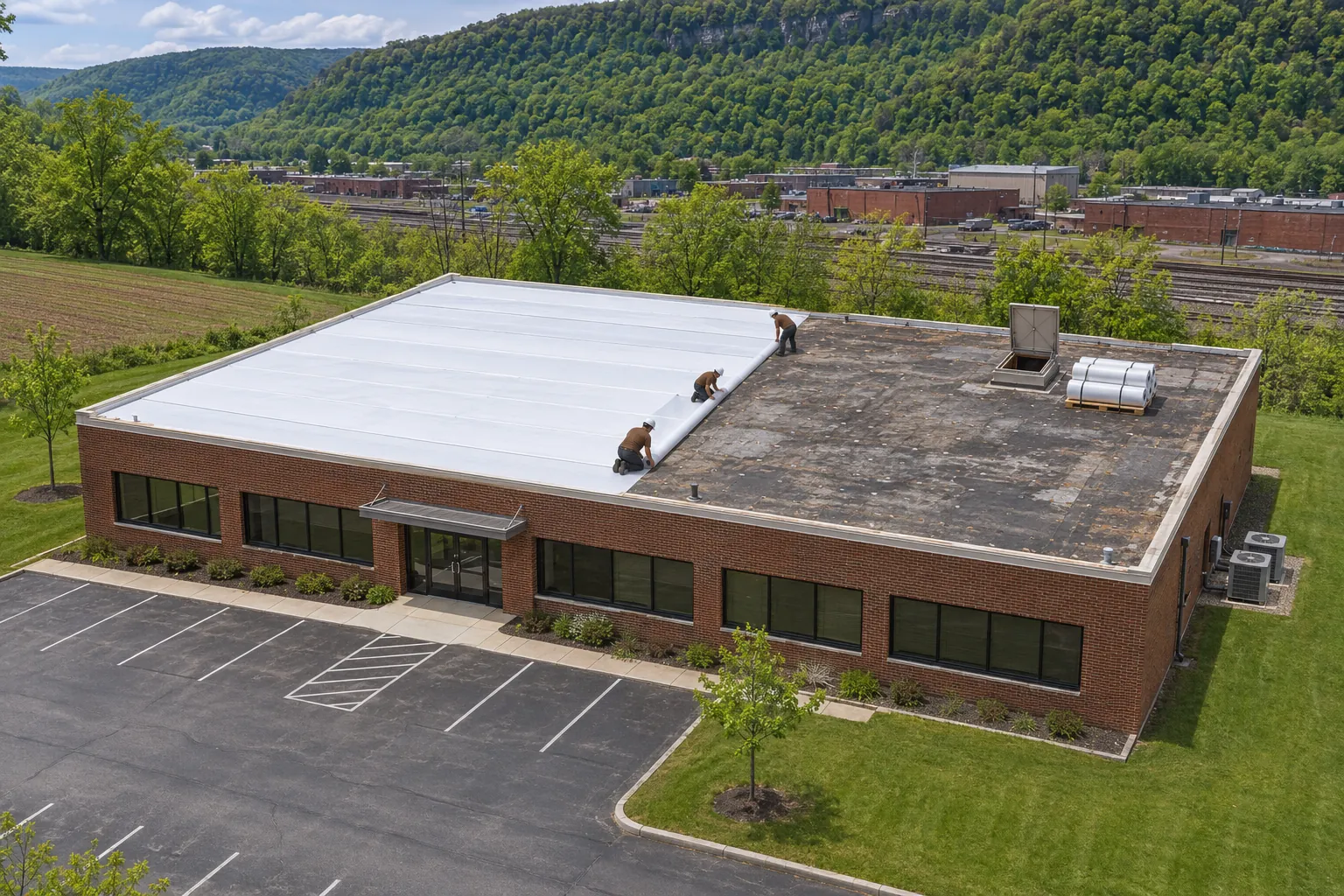
Panel replacement, fastener changes, or standing-seam retrofits on metal storage and equipment buildings near the yards.
Metal roofing detailsThese conditions on shop and warehouse roofs tell us a replacement is close.
Water landing on lifts, tools, or customer equipment needs a quick temporary repair, then cores to see how far the wet board runs.
Seams that open after every freeze show a membrane past its useful bond. Patching buys a season at most.
Low curbs leave flashing only inches above the roof, where snowmelt reaches it. A reroof raises them.
Fasteners rusted in place leak at every rib. Panels that are still solid take new screws; rusted sheets come out.
Leaves and grit from nearby lots clog strainers, and water backs up against the curbs until it finds a seam.
Perimeter metal that rattles or lifts in storms lets wind under the membrane. New edge metal and coping go on with the reroof, fastened at the spacing the system calls for.
Share your delivery calendar when you call. It goes straight into the staging plan we price.
Schedule Your Free InspectionEach step below has a delivery check built in.
We inspect the roof, take cores, and map the yard, doors, and delivery routes below it.
Sections are sequenced around known delivery dates, with weather days held in reserve.
Material lifts happen on non-delivery days, and the dumpster sits clear of the doors.
Each section is torn off, insulated, and covered before the crew leaves the roof.
We review every curb and edge with you and hand over photos and system records.
The changes owners notice once the work is closed out.
From Altoona we cover Johnstown and the four other towns below.
Building outside this list? Call us or send us a message.
| Town | County | What We See On Roofs There |
|---|---|---|
| AltoonaHome Base | Blair County | Brick railcar shops, grocery distribution warehouses, and church halls with long flat roof fields. |
| Indiana | Indiana County | Warehouses that need clear closeout records so later crews can match repairs to the installed system. |
| Latrobe | Westmoreland County | Church halls and meeting spaces where entrances must stay usable around scheduled events. |
| DuBois | Clearfield County | Warehouse roofs where drains, slope, and temporary water routes need planning during replacement. |
| Huntingdon | Huntingdon County | Leased commercial buildings where owner and tenant agree on access and interior protection first. |
Answers for shops, plants, and warehouses in the city.
Yes, when the staging plan and delivery routes are settled early. We mark where overhead work or material lifts would block access and keep those areas clear on delivery days. Weather and roof findings still set when an opened section can close, so the schedule keeps some slack.
We set crane times with your receiving lead before work starts, and we confirm them the day before each lift. If a delivery moves, the lift moves too, since the crane plan is written around your yard. Lifts never pass over people or open doors, and the crane operator works from a signal person on the ground.
Shops tend to have more exhaust fans, heaters, and curbs per square foot than storage buildings. Each opening gets its own flashing detail in the scope, and the work over open bays gets overhead protection so tools and vehicles below stay safe.
Most bays stay open. The bay under the active section may close for part of a day while tear-off runs above it, and we tell you which bay and which day in advance. Tools and vehicles in that bay can stay in place under covers when moving them is harder than protecting them.
Wide warehouse roofs with many units often suit TPO; older masonry shops often suit EPDM; metal buildings take panels or a retrofit. Cores and the building use decide it, and the proposal explains the choice in plain terms.
Pricing follows the roof itself: area, layers, deck, flashing, equipment, access, and season. Travel time is part of staging and shows as its own line in the proposal. Every price still follows a roof walk and cores on your building.
Tell us about the shop, its roof, and the delivery days that matter. We will plan the reroof around them and put it in writing.