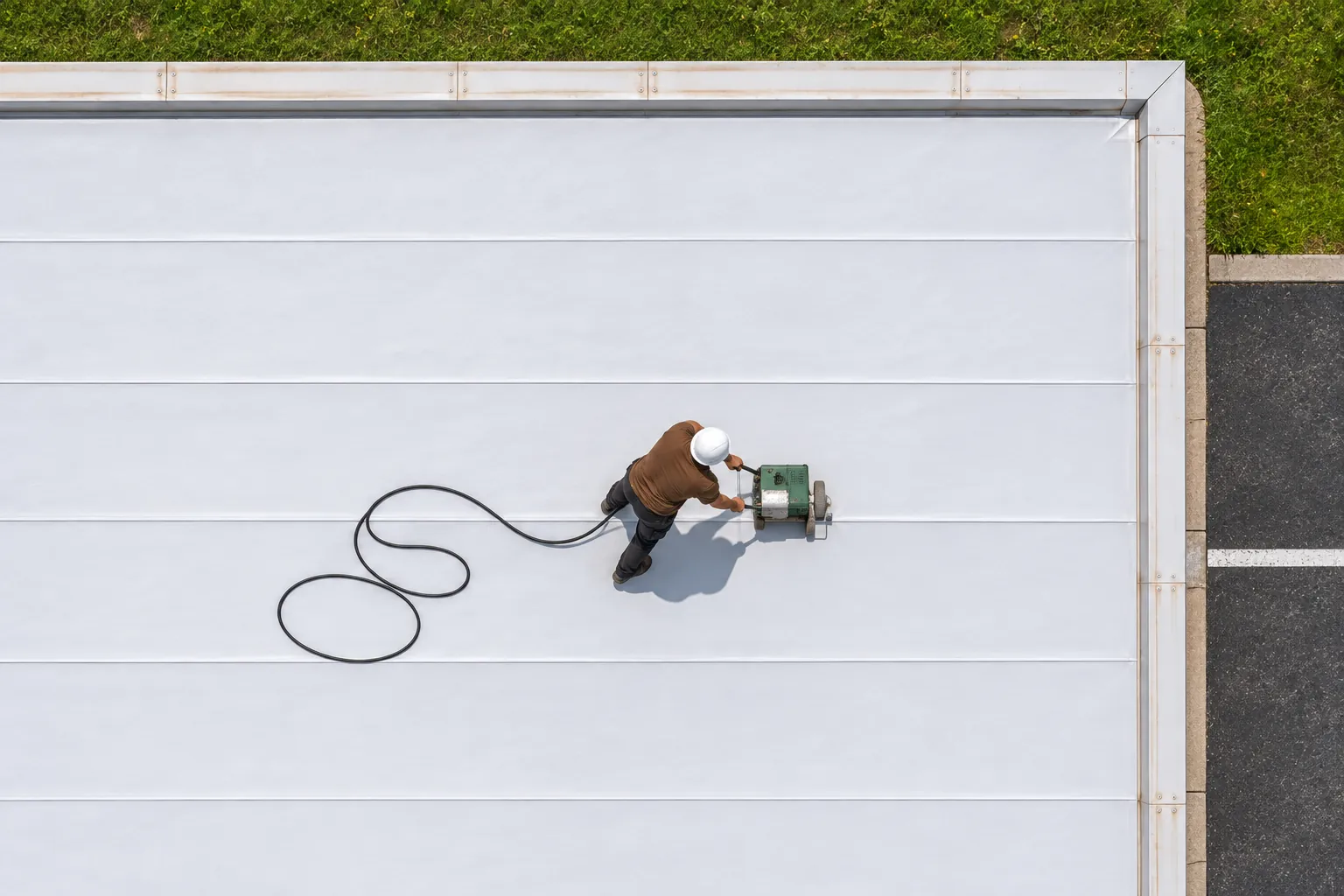
TPO With Tapered Drain Sumps
Covers seams, drains, curbs, flashing and deck.Welded membrane over tapered insulation, with sumps cut around each drain so the water line sits at the bowl.
TPO roofing page
DuBois commercial roofing for warehouses, plants, and shops: we replace TPO, EPDM, and metal roofs and rebuild the drains and slope that carry water off them.
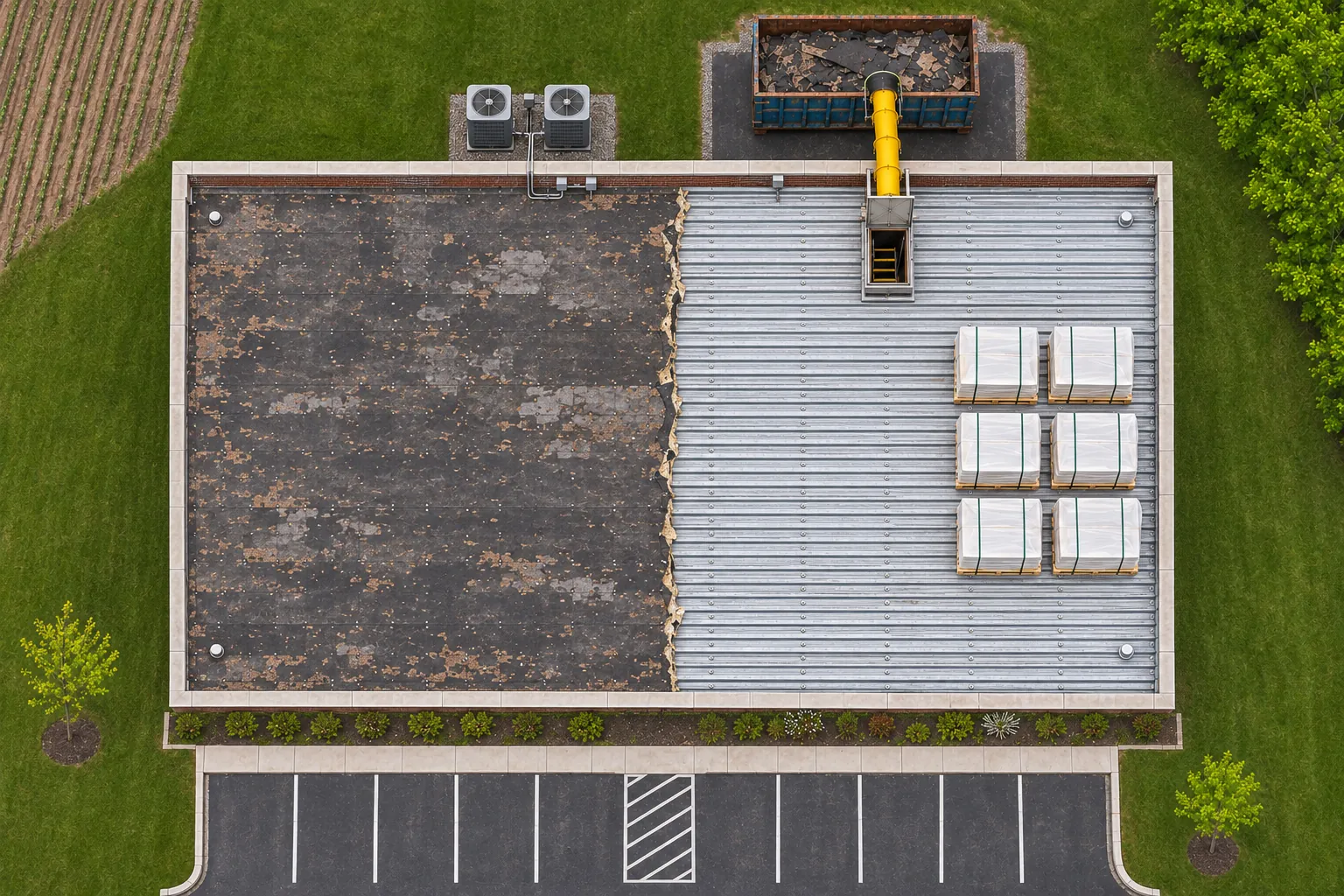
DuBois commercial roofing on a warehouse treats every drain as part of the replacement, since a new membrane over a bad outlet repeats the old leak.
We inspect each drain bowl, clamp ring, and pipe connection, then check the slope around it. Bowls set high, cracked rings, and sagging insulation all hold water, and each one gets fixed before new membrane goes down.
Drains also need to work during construction. Temporary outlets and the order of tear-off keep water moving off open and finished sections, so rain never pools on bare deck or fresh insulation.
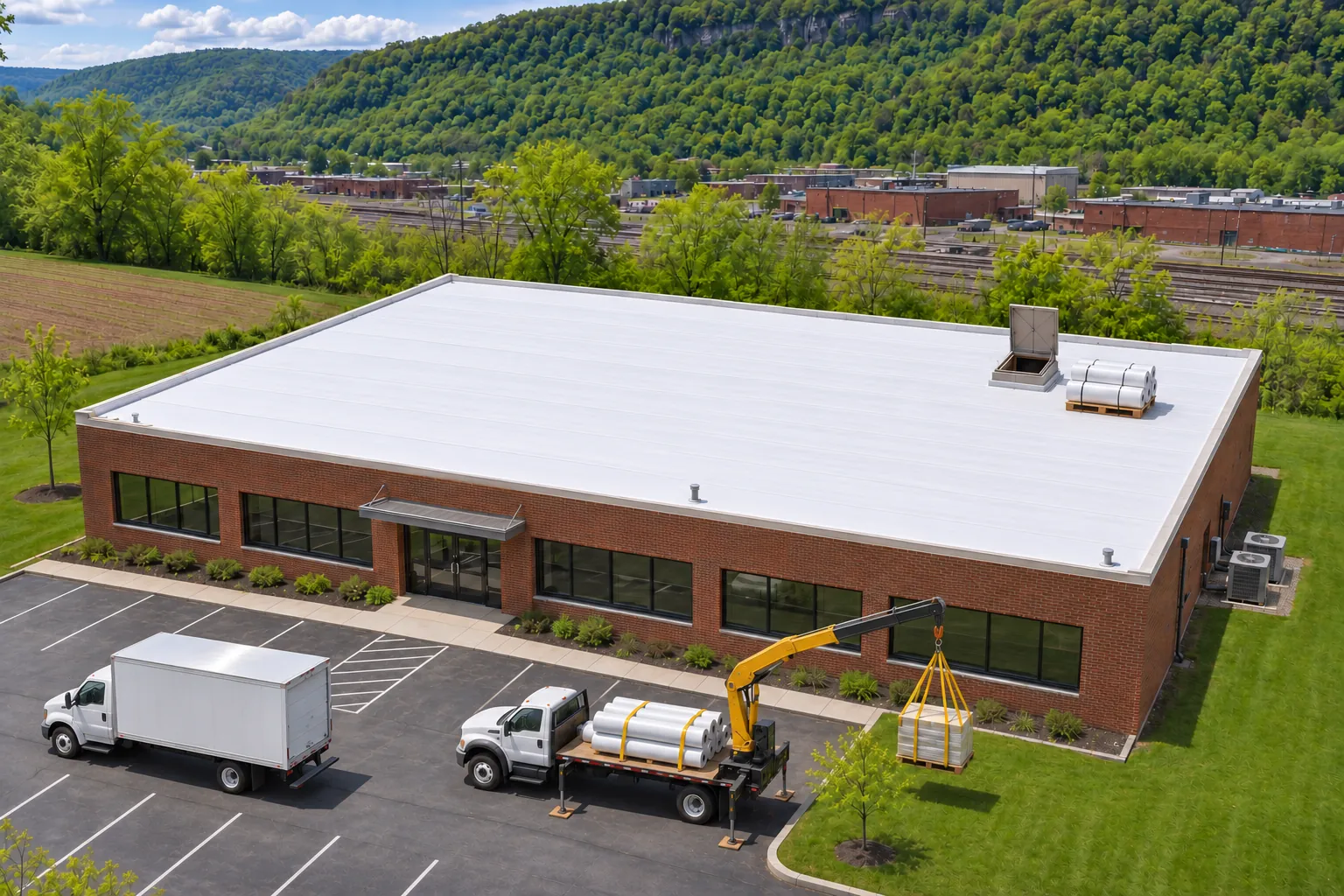
Each system below comes with drain and slope work in the scope.
Welded membrane over tapered insulation, with sumps cut around each drain so the water line sits at the bowl.
TPO roofing page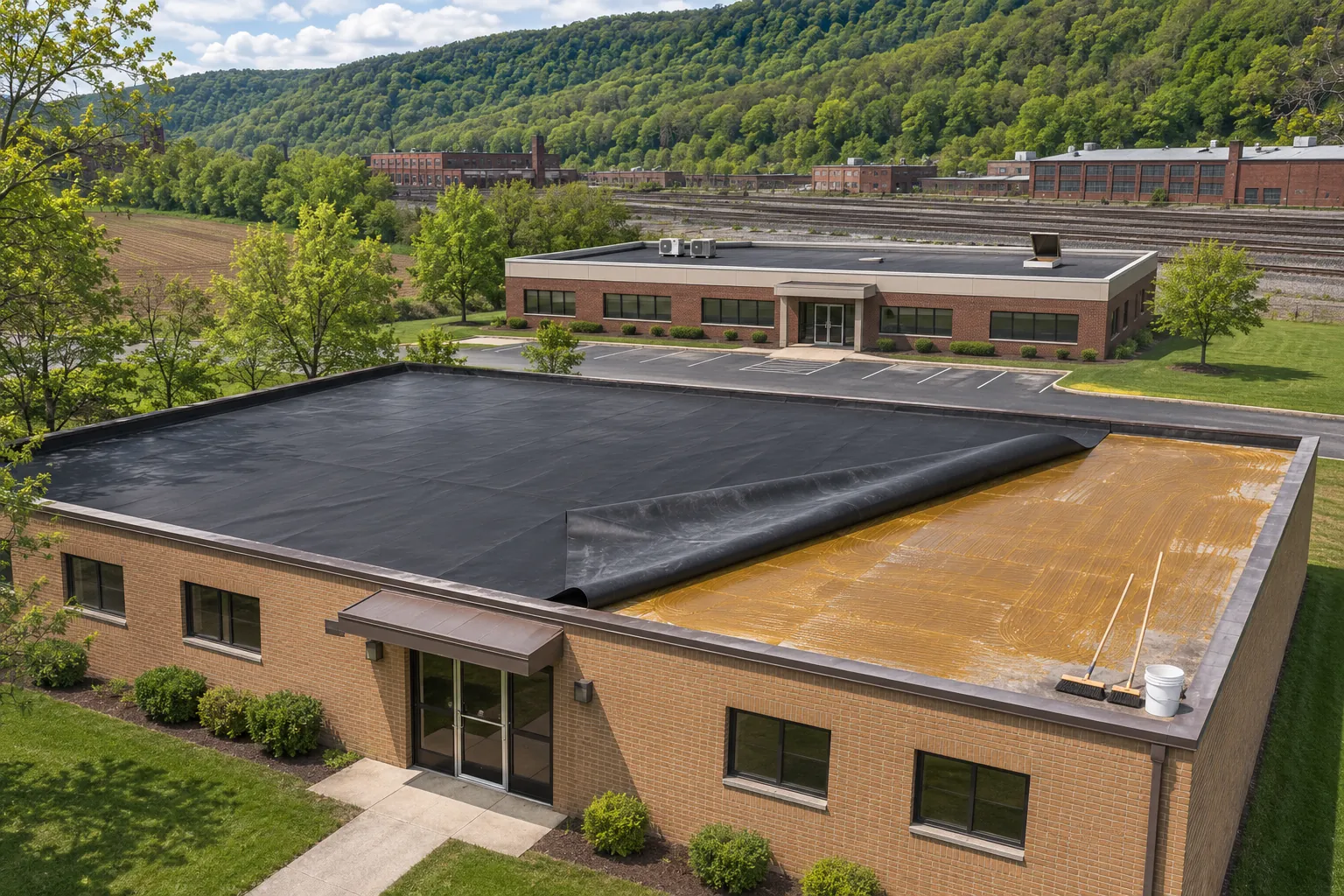
Rubber roofs finished with new drain inserts or clamp rings and rubber flashing at each outlet.
EPDM roofing page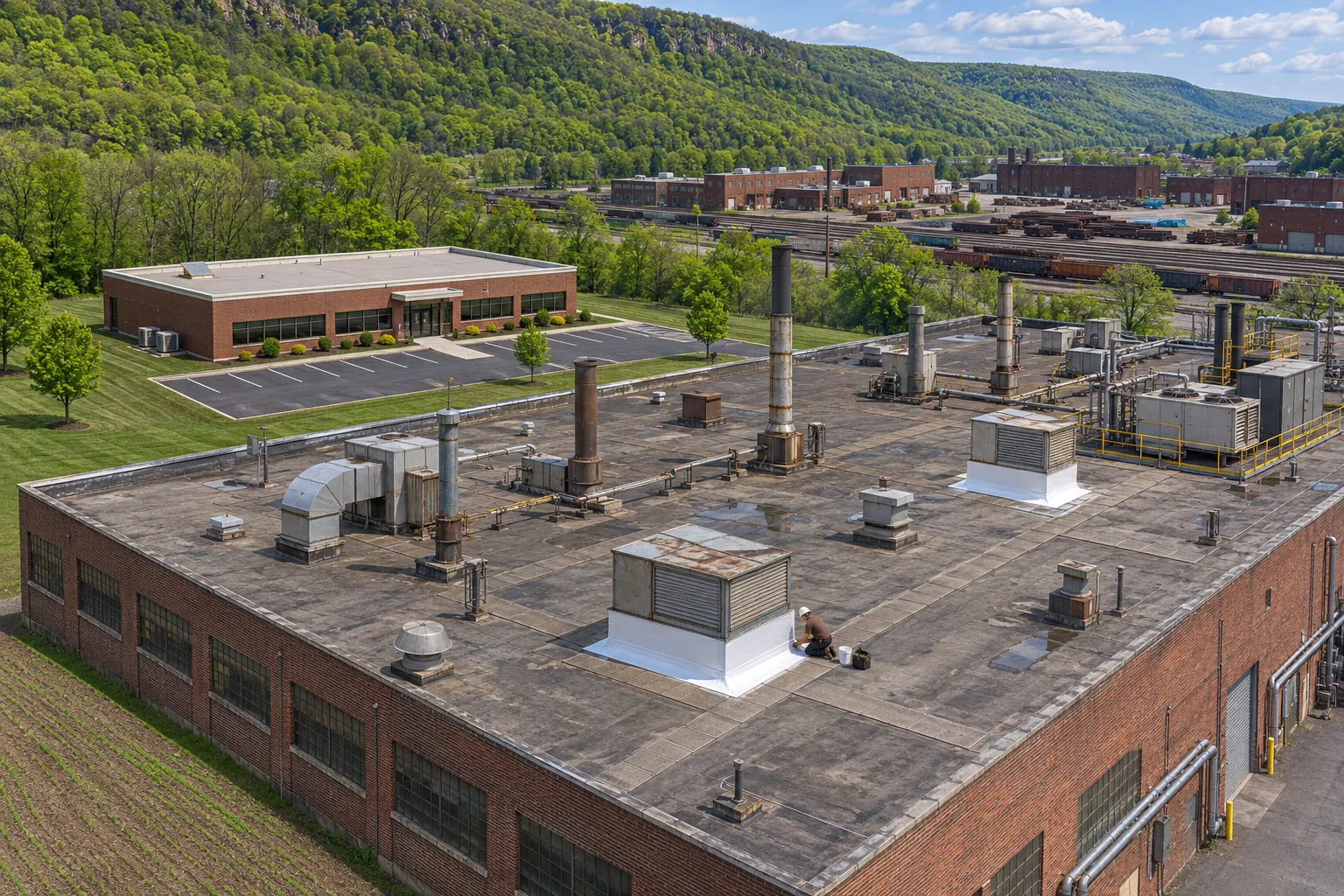
Plant reroofs that review primary and overflow drains, scuppers, and the piping below production space.
Industrial roofing page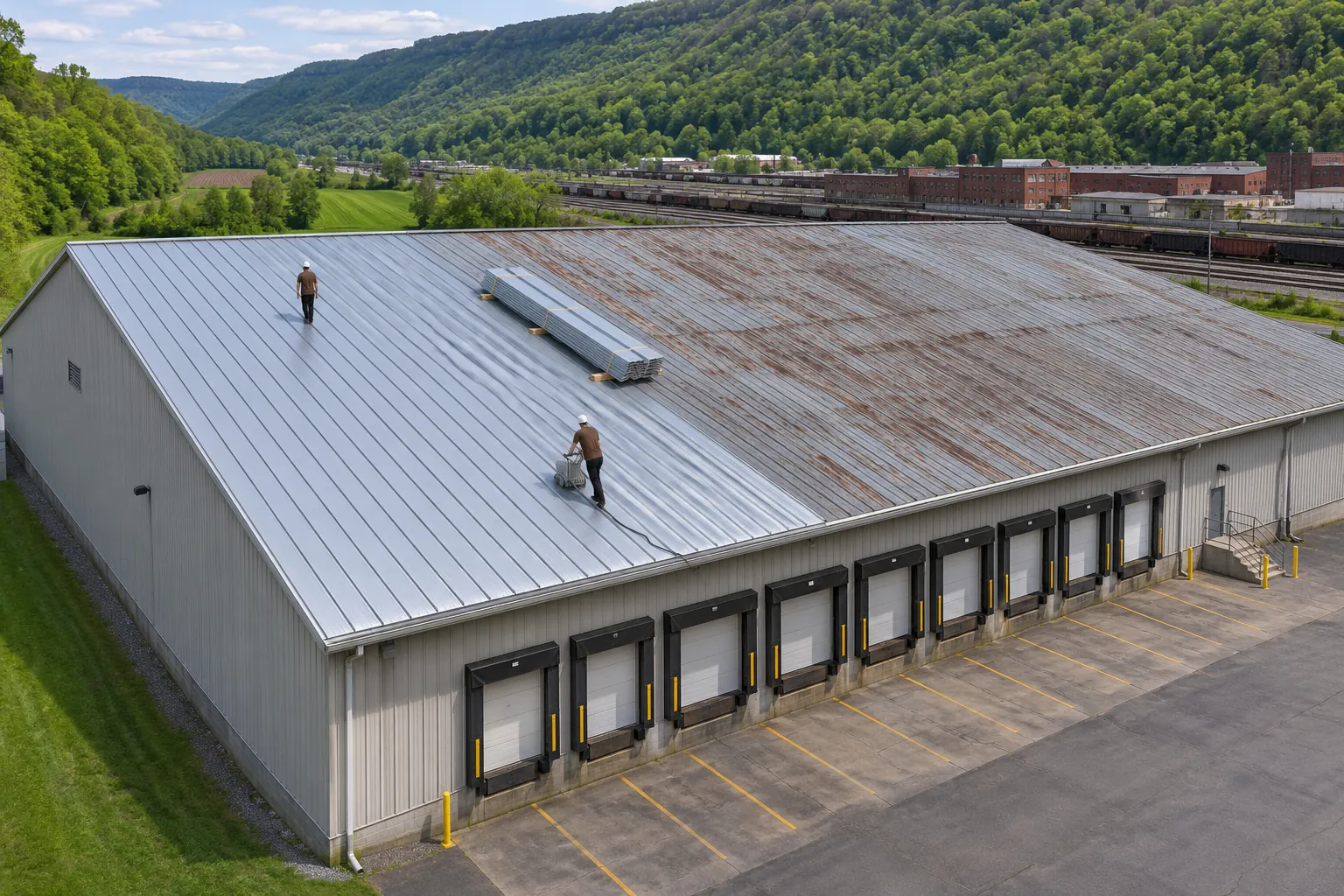
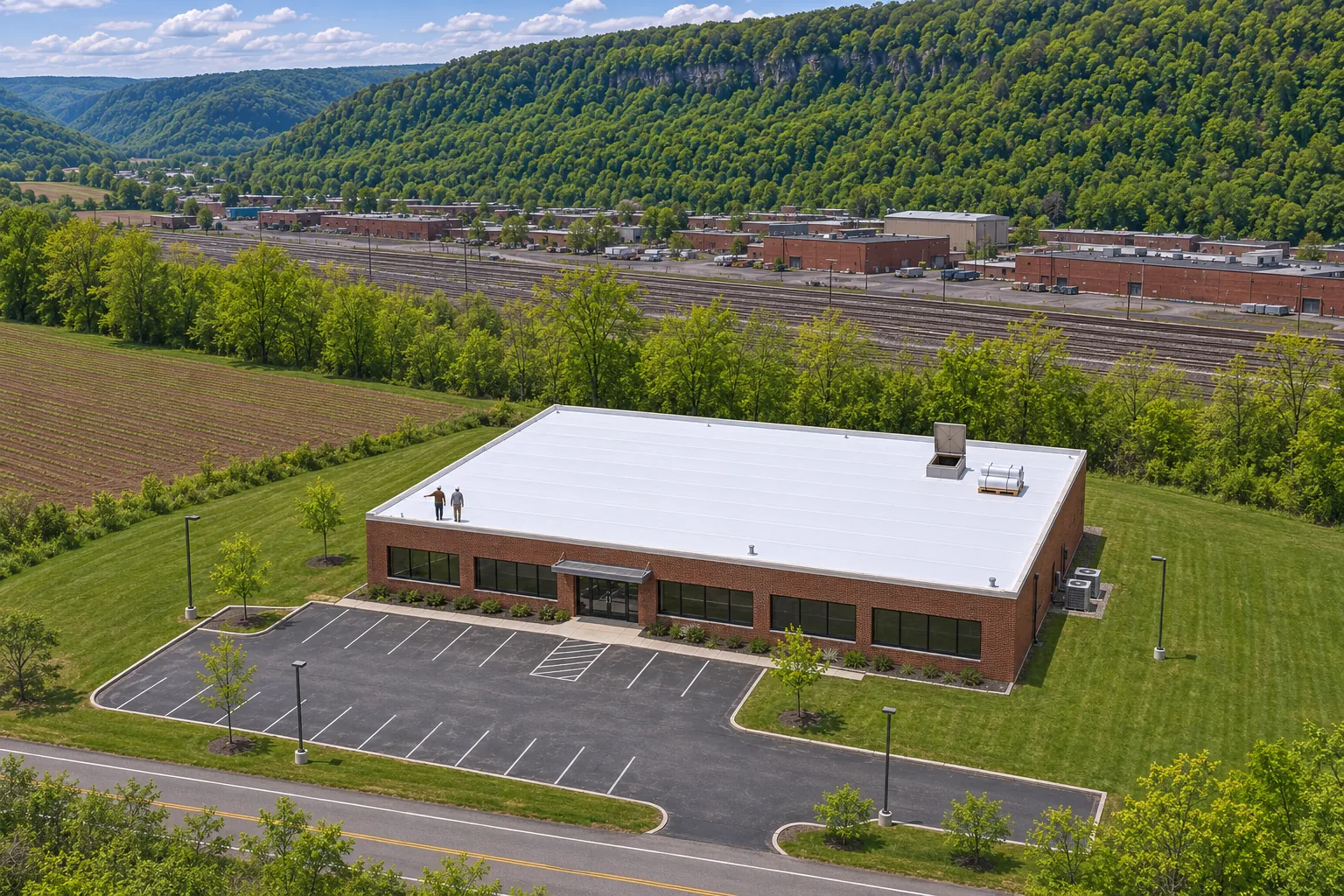
Panel and standing-seam roofs paired with gutters, downspouts, and eave trim that move meltwater off the building.
Metal roofing pageMost leaks we trace on area warehouses start at or near a drain.
Leaks right under a drain point to a failed clamp ring or a cracked pipe connection.
A bowl set too high leaves a ring of standing water around it. Tapered sumps fix the height.
Ice in a ponded ring cracks the membrane, and each thaw lets more water in.
Wet, crushed board lowers the roof surface and creates ponding water on a flat roof.
A single blocked drain with no overflow lets water climb the curbs and walls.
Years of standing water can rust steel deck flutes under the low spots. Cores and a look from below show whether those sheets need replacing before new insulation goes down.
A drain-by-drain inspection shows what the replacement needs. Book one before the next freeze.
Schedule Your Free InspectionDrain work runs through each step of the job.
We check flow, clamp rings, bowls, and pipe connections, and note the slope around each outlet.
Tapered board and crickets are laid out so water reaches every drain and scupper.
Sections open in an order that keeps outlets working, with temporary routes where needed.
Bowls, inserts, or clamp rings get replaced, and new membrane flashes into each one.
A water test at the drains confirms flow before the final walk and records.
How the roof handles water once the drains and slope are rebuilt.
We travel from Altoona to DuBois and the towns listed below.
Farther out? Call us or send us a message.
| Town | County | What We See On Roofs There |
|---|---|---|
| AltoonaHome Base | Blair County | Brick railcar shops, grocery distribution warehouses, and church halls with long flat roof fields. |
| Johnstown | Cambria County | Repair shops and plants where reroof staging has to work around large equipment deliveries. |
| Indiana | Indiana County | Warehouses that need clear closeout records so later crews can match repairs to the installed system. |
| Latrobe | Westmoreland County | Church halls and meeting spaces where entrances must stay usable around scheduled events. |
| Huntingdon | Huntingdon County | Leased commercial buildings where owner and tenant agree on access and interior protection first. |
Answers for warehouses and plants in DuBois.
Include drains in the scope as working parts of the new roof. We inspect connections and the surrounding slope, then tie new roof details into the existing drainage. Outlets also need to work during construction so no opened or finished section collects water.
When the bowl is cracked, the clamp ring is corroded, or the bowl sits so high that tapered sumps cannot fix it. Many drains only need new inserts or rings, and the inspection shows which. Pipe connections below the deck get checked from inside when access allows.
Sagging or wet insulation, drains set above the roof surface, deflected deck, or too little slope toward outlets. Cores and a level survey show which cause applies, and the reroof fixes it with tapered board and drain work.
Small puddles that dry within a day or two are common. Water that stays longer, freezes, or grows each year signals a slope or drain problem worth fixing in the reroof. Ponding also hides membrane damage, so we probe those areas closely.
New tapered insulation, crickets between drains, and sumps at each bowl. Overflow drains or scuppers get added where the roof layout calls for them. Downspouts and leaders get checked so water leaving the roof has somewhere to go.
Each section is covered by the end of the day, and drains stay working throughout. We also protect stock under the active section when the owner asks. Racks near drains get extra attention, since a leak there would land first.
Tell us where water sits on your roof and where it leaks inside. We will inspect every drain and write a replacement scope that fixes them.