Blair County Roofing

Altoona Commercial Roofing Contractor

New Roof Systems for Rail Shops, Warehouses, and Church Halls

Altoona commercial roofing is the work we do: we install TPO, EPDM, and metal roofs and replace worn industrial roofs on buildings across the city.

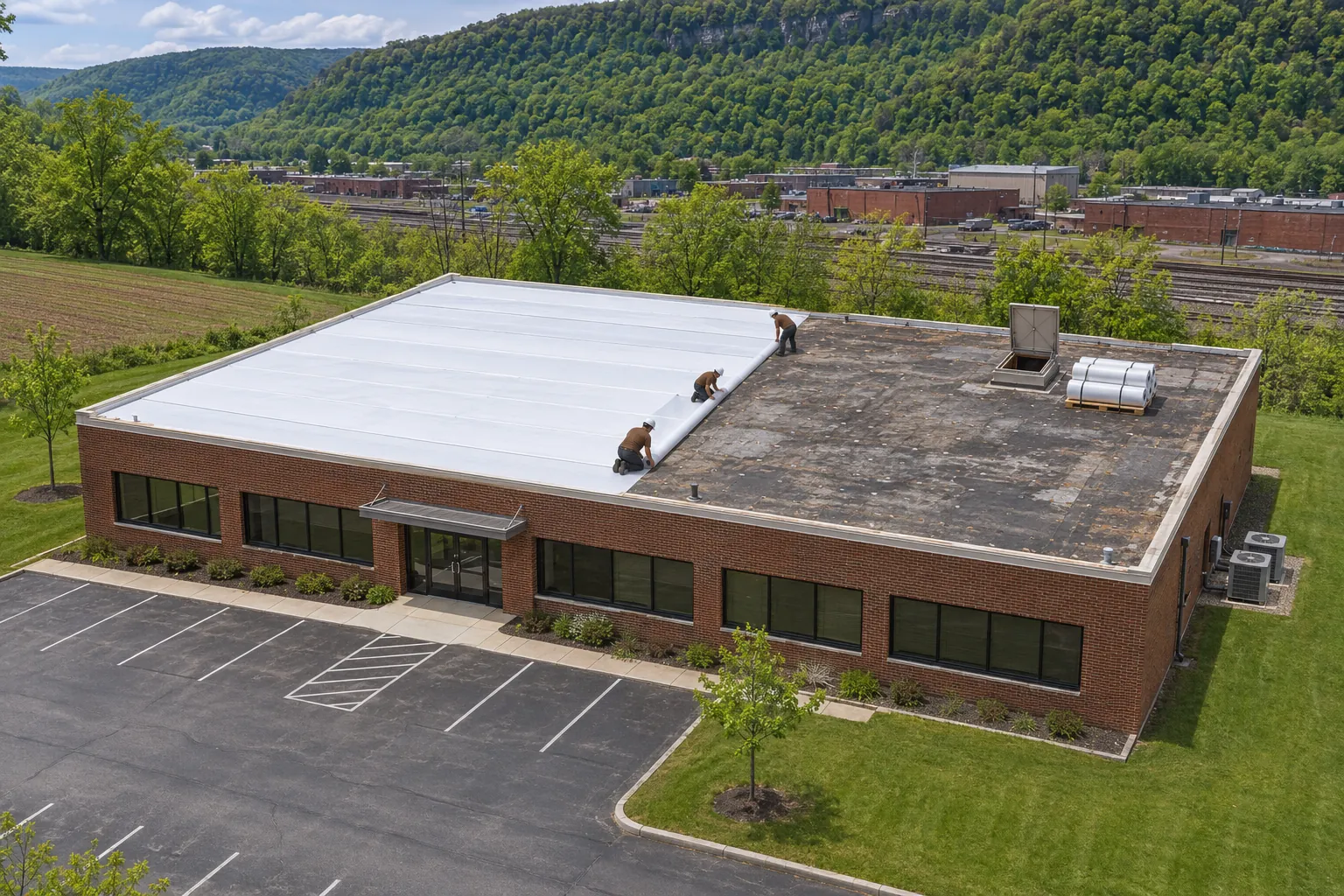
Drone view of a one-story brick office building half covered in new white TPO, with two roofers working at the seam line and wooded ridges and a rail yard behind
  • SystemsTPO, EPDM, and metal
  • Work TypesNew roofs and full replacement
  • BuildingsShops, warehouses, halls
  • First StepRoof walk and core cuts

Altoona Commercial Roofing Systems We Install

Altoona commercial roofing comes down to four systems that fit nearly every flat and low-slope building here. The row on each card shows the roof parts that work rebuilds.

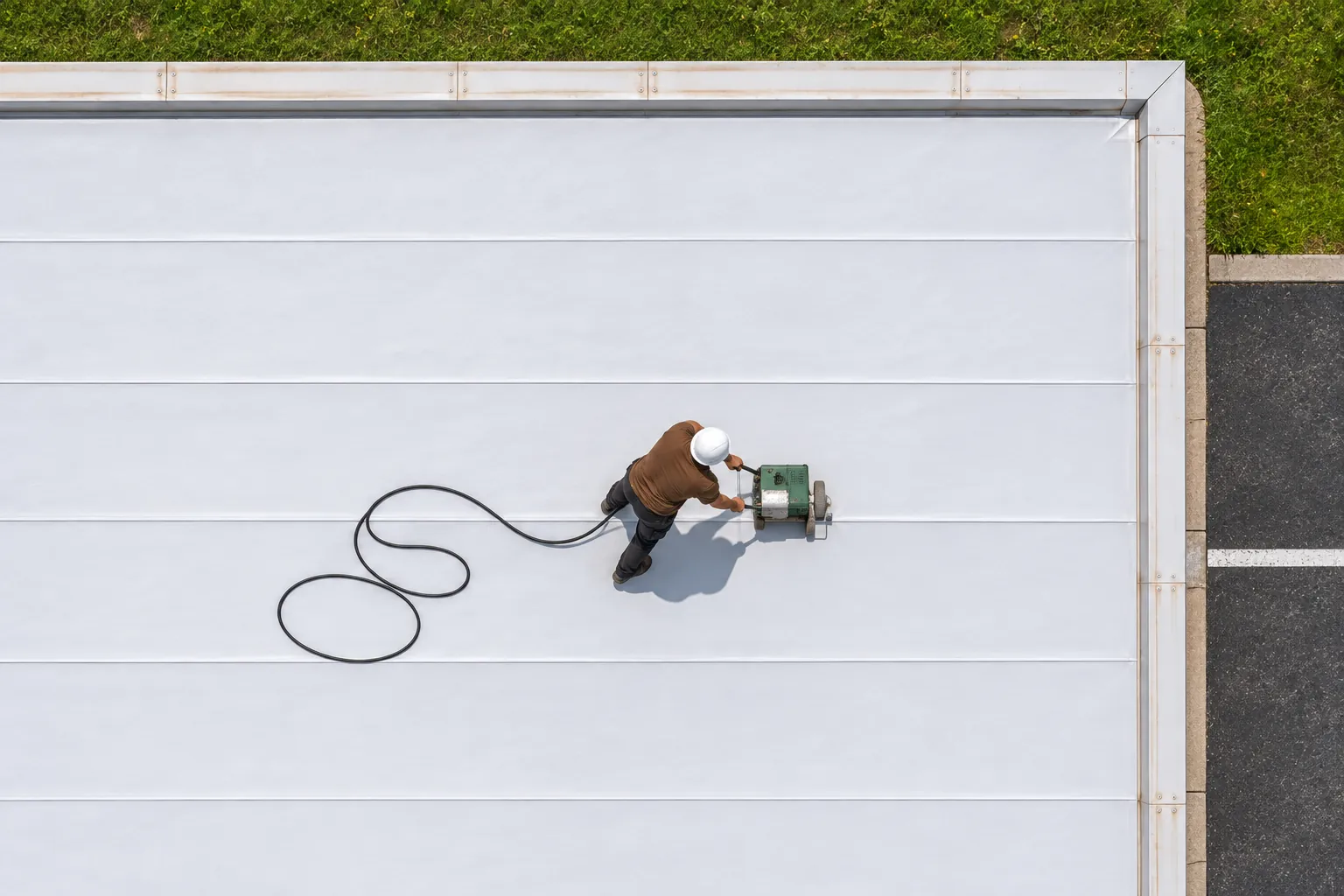
Top-down view of a roofer in a white hard hat running a hot-air welder along a seam on a white TPO roof near the parapet

White TPO Membrane Roofs

Covers seams, drains, curbs, flashing and deck.

Heat-welded white sheets over new insulation, a common pick for grocery warehouses, offices, and distribution buildings with busy rooftop equipment and long, open roof fields.

See TPO roofing
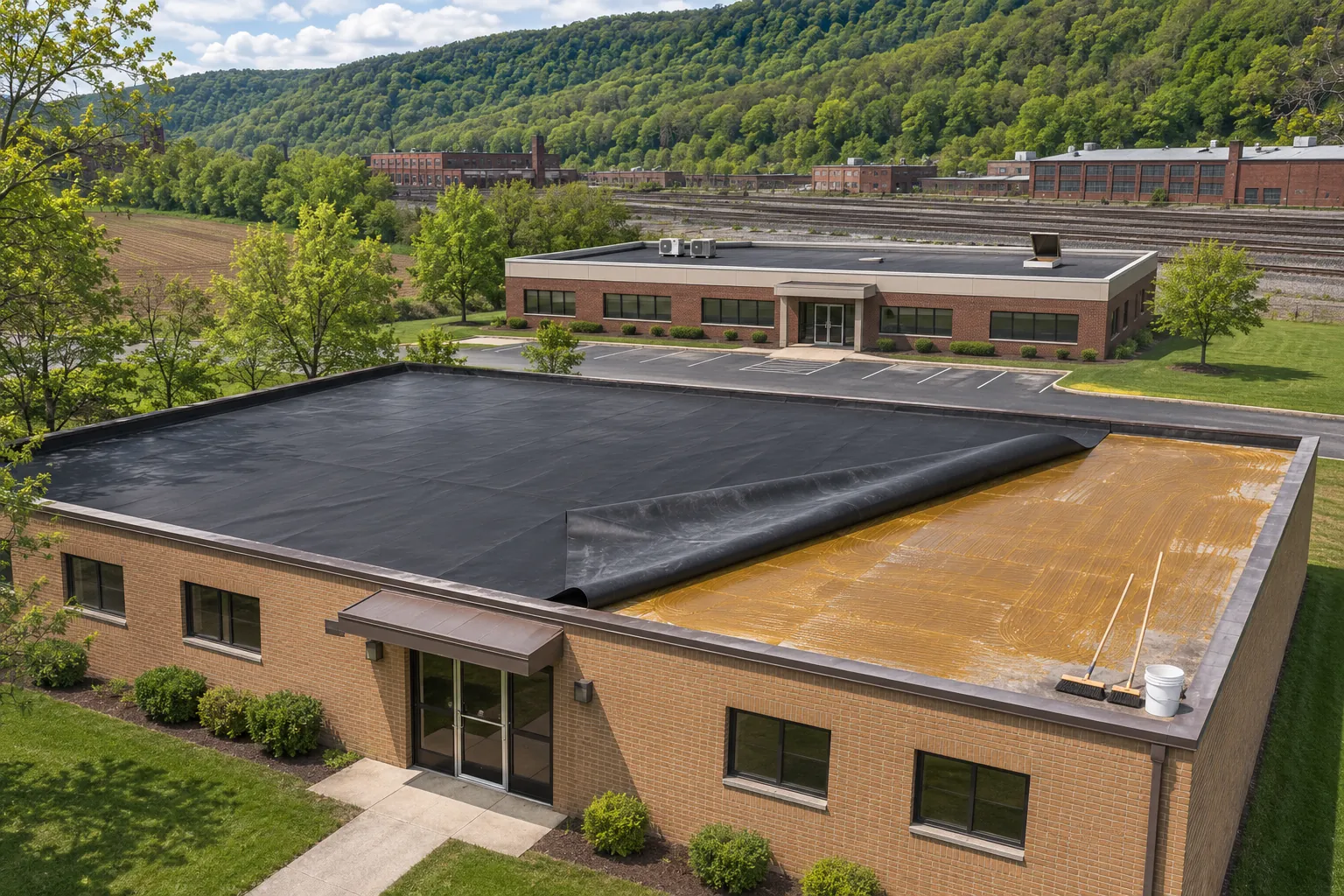
Drone view of a tan brick building with a black EPDM sheet folded back over fresh bonding adhesive on the deck, with wooded ridges behind

Black EPDM Rubber Roofs

Covers seams, drains, flashing and deck.

Adhered or mechanically attached rubber sheets that stay flexible through long ridge-valley winters, often chosen for church halls, older brick shops, and low-slope additions.

See EPDM roofing
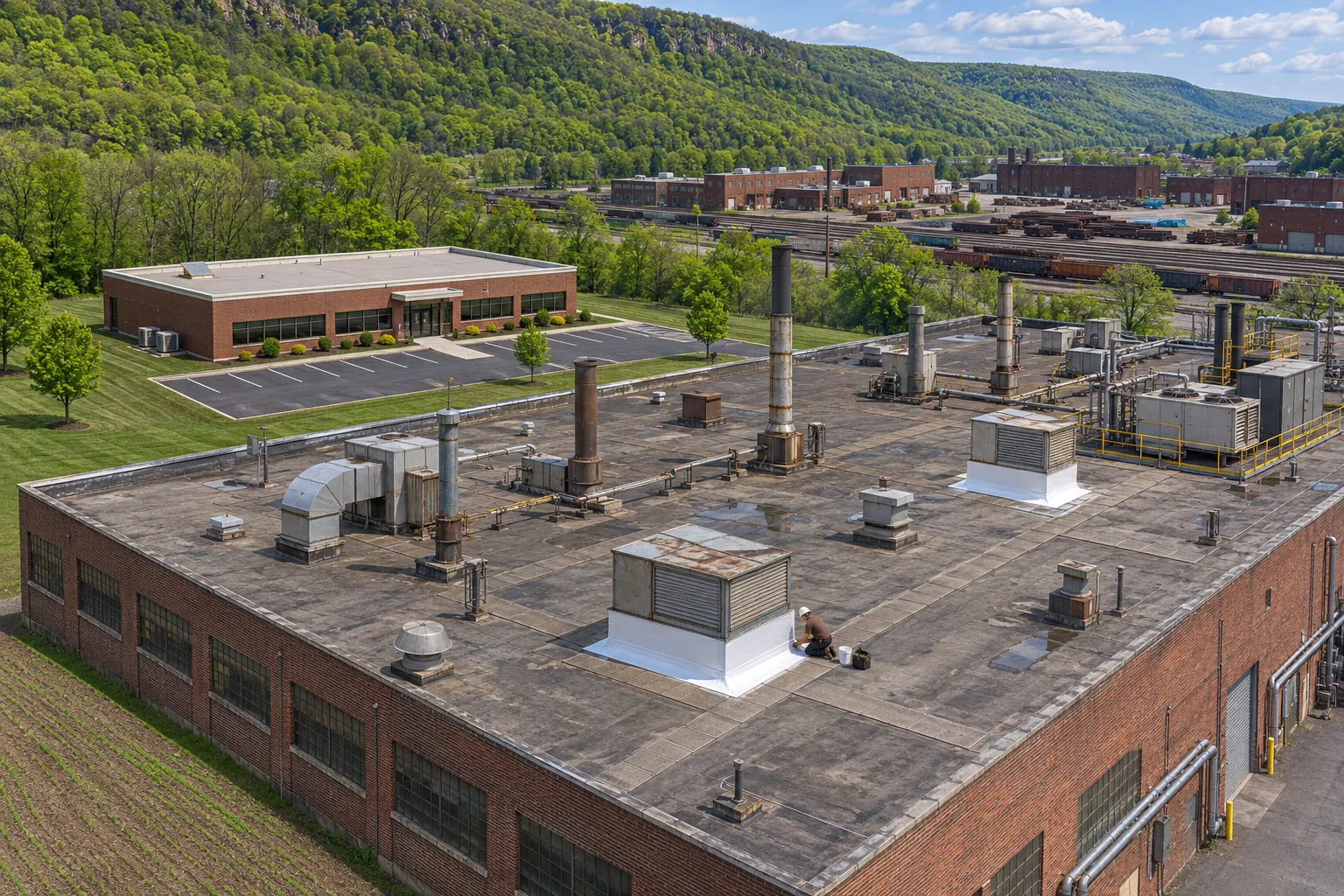
Drone view of a brick industrial roof crowded with exhaust stacks, ducts, and rooftop units, with a roofer flashing a new curb and a rail yard behind

Roofs Over Production Floors

Covers seams, fasteners, drains, curbs, flashing and deck.

Reroofing planned around exhaust stacks, curbs, ducts, and shift schedules on railcar shops, fabrication plants, and other buildings where work continues below the roof.

See industrial roofing
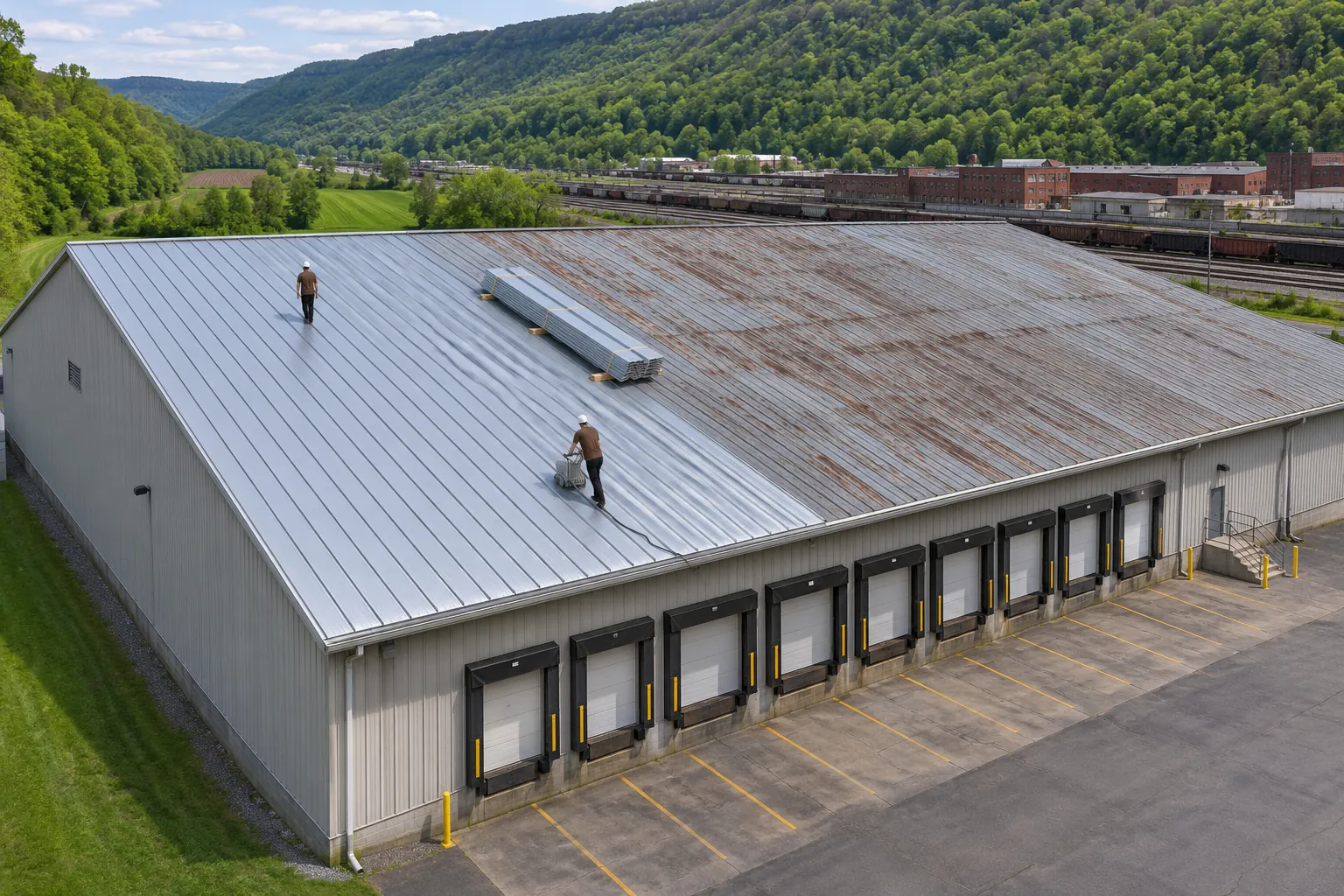
Drone view of two roofers setting new standing-seam metal panels over a rusted metal warehouse roof with loading docks below

Standing-Seam and Panel Roofs

Covers seams, fasteners, curbs and flashing.

New metal roofs, panel replacement, and retrofit framing over worn metal on warehouses, equipment buildings, and shops with failing fasteners or rusted laps.

See metal roofing

Commercial Roofing Warning Signs on Altoona Buildings

These conditions bring most owners to us. The chip on each one shows how soon the roof needs a roofer on it.

  • Water Dripping Into Occupied Space

    Call Now

    Active leaks onto stock, pews, or machinery need a temporary repair first, then a look at the wet insulation around the leak before anyone prices the full roof.

  • Seams Opening on an Older Membrane

    Repair First

    Several open laps in one season usually means the sheet is near the end of its service. Core cuts beside those seams show whether water has spread into the insulation.

  • Ice and Ponding Around Roof Drains

    Repair First

    Freeze-thaw cycles crack membrane where meltwater sits. When a drain bowl sits high or the insulation has sagged, the reroof needs new tapered board at that drain.

  • Backed-Out Fasteners on Metal Panels

    Watch

    Loose screws and worn washers let water in at every rib. Panels that are still solid get new fasteners, and rusted-through sheets get replaced or covered by a retrofit.

  • Cracked Flashing at Rooftop Units

    Watch

    Base flashing at curbs, stacks, and vents dries out and splits. A replacement rebuilds those details at the right height for the new insulation thickness.

  • Sagging Deck Under Heavy Snow

    Call Now

    Visible deflection, new ceiling cracks, or doors that stick after a storm call for a structural engineer before any roofing work, and we keep crews off that roof until it is checked.

Repair, Recover, or Replace: Commercial Roofing Choices in Altoona, PA

A worn flat roof has three paths. Core cuts and a moisture survey decide which one the building can take.

What We Install

Full Tear-Off Replacement

Down to the deck, then rebuilt

Old roof
Removed to the deck, which gets checked and repaired
When it fits
Wet insulation, two existing layers, or deck damage
Insulation
All new, with tapered board at drains
Flashing and edges
New at every curb, wall, and edge
Upkeep after
Routine checks backed by closeout records

Targeted Repair

Fix the failed areas only

Old roof
Stays in place while failed laps, flashing, or panels get fixed
When it fits
Damage sits in a few spots on a dry roof field
Insulation
Existing board stays where dry
Flashing and edges
Rebuilt only where they failed
Upkeep after
Continued checks on an aging membrane

Recover Over Existing

New membrane over one layer

Old roof
Remains under a new cover board and membrane
When it fits
Single existing layer, dry insulation, solid attachment
Insulation
Added on top after wet areas are cut out
Flashing and edges
Raised to suit the new roof height
Upkeep after
Normal checks on a new system

We write the reason for the recommended path into the proposal, along with what the core cuts and moisture readings showed.
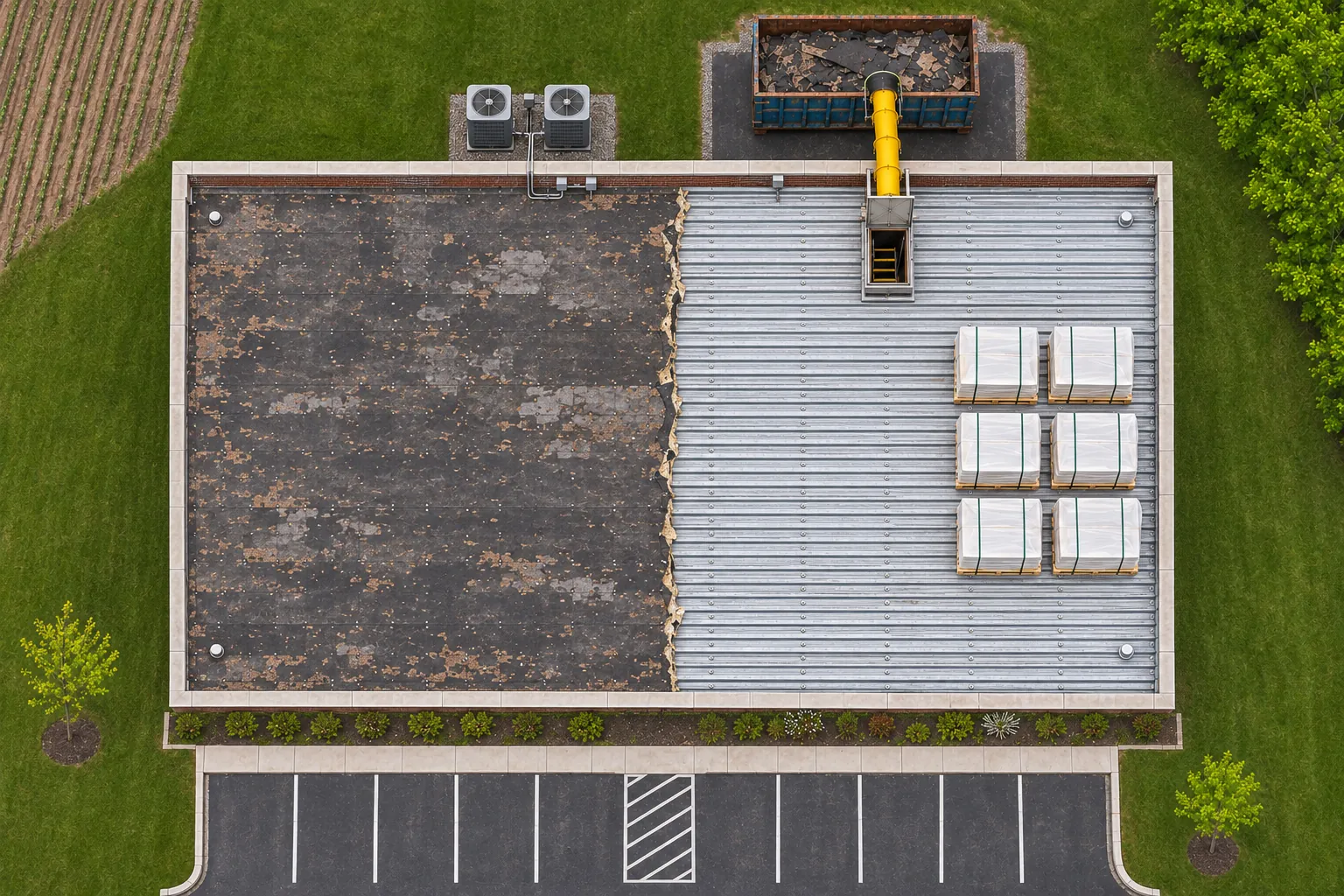
Top-down view of a flat roof mid tear-off, half old surface and half bare steel deck, with insulation bundles, a debris chute, and a dumpster

Plan Your Altoona Commercial Roofing Work Early

Tear-off needs dry, workable days, and ridge-valley winters run long. Book the roof walk before the season gets tight.

Schedule Your Free Inspection

How Commercial Roofing Work Runs on Altoona Buildings

Five steps take a roof from the first walk to closeout records.

  1. Inspect the Roof and Take Cores

    We walk the whole roof, photograph seams, drains, curbs, and edges, and cut small cores to read the layers and check the insulation for water.

  2. Write the Scope and Removal Limits

    Your proposal names the membrane or panel system, insulation, attachment, flashing, and edge metal, and says what comes off, what stays, and how deck repairs get priced.

  3. Set Access Around Operations

    Crane spots, material routes, debris chutes, and interior protection get planned around shifts, deliveries, services, or tenants before tear-off starts.

  4. Tear Off and Install in Sections

    Old roofing comes off only as far as the crew can dry in that day. Insulation, membrane or panels, flashing, and edge metal follow section by section.

  5. Close Out With Photos and Records

    A final walk checks welds, laps, and terminations, and you receive photos of the details plus the installed system information for future crews.

What Changes on the Roof After a Full Replacement

The same roof conditions, read before and after a reroof.

Before Reroofing

  • Water standing at drains two days after rain
  • Soft, wet insulation under foot traffic
  • Base flashing split at curbs and stacks
  • Edge metal lifting in wind
  • Repeat patches at the same seams each spring

After Reroofing

  • Tapered board moving water to the drains
  • Dry new insulation fastened or adhered to the deck
  • Flashing rebuilt to the new roof height
  • Perimeter edge metal and coping fastened tight
  • Welded or taped seams over a dry assembly
Roofing Coverage

Find Your Town for Commercial Roofing Near Altoona

We serve Altoona and five towns across Cambria, Indiana, Westmoreland, Clearfield, and Huntingdon counties.

Outside these towns? Call us or send us a message.

TownCountyWhat We See On Roofs There
AltoonaHome BaseBlair CountyBrick railcar shops, grocery distribution warehouses, and church halls with long flat roof fields.
JohnstownCambria CountyRepair shops and plants where reroof staging has to work around large equipment deliveries.
IndianaIndiana CountyWarehouses that need clear closeout records so later crews can match repairs to the installed system.
LatrobeWestmoreland CountyChurch halls and meeting spaces where entrances must stay usable around scheduled events.
DuBoisClearfield CountyWarehouse roofs where drains, slope, and temporary water routes need planning during replacement.
HuntingdonHuntingdon CountyLeased commercial buildings where owner and tenant agree on access and interior protection first.

Owner Questions About Altoona Roofs

Six questions we hear on first roof walks, grouped by topic.

Roof Life

How Long Does a Commercial Roof Last?

Service life comes from the system, how it was installed, and how it has been kept up. Drainage, foot traffic, rooftop equipment, and wet insulation all shorten it. We judge a roof by its seams, flashing, and core samples, and that condition sets the replacement timing more than the roof's age does.

Can an Older Railcar Shop Roof Still Be Kept?

Often in part. We compare current seams, connections, and core samples with the shop's leak and repair history. Field areas in good shape can stay in service while damaged details at equipment, curbs, and drains get rebuilt, and the proposal shows that split clearly.

Timing

Is Commercial Roof Replacement in Winter Possible?

It works when the crew has safe access and the chosen system's temperature and moisture limits can be met. We open only what can be closed before the crew leaves, keep temporary protection on hand, and build weather days into the schedule so a cold snap leaves no section exposed.

What Should a Roofing Inspection Include?

Expect a walk of the drainage, seams, flashing, and edges, moisture checks, and core cuts where readings look wet. Findings tie to a written scope that explains what stays, what gets replaced, and which access or operating limits shape the schedule.

Building Type

What Is Considered Commercial Roofing?

Roofing on buildings used for business, worship, industry, or public service, such as church halls, shops, plants, and warehouses. These roofs are usually low-slope membrane or metal systems with drains, curbs, and rooftop units, and the work has to fit around the people and operations inside.

Does Hail Damage Mean the Insurer Pays for a New Roof?

Coverage depends on the policy and the cause of damage, and your insurer makes that call. We provide a documented inspection with photos, core results, and a repair or replacement recommendation based on the physical findings, which you can use in the claim discussion.

Read all thirty questions on the FAQ page

Hire an Altoona Commercial Roofing Contractor

Tell us about the building, its roof, and any leaks or deadlines. We will set up a roof walk and core cuts, then write a scope you can compare line by line.

Call Us (814) 679-7043