
TPO With Weld Records
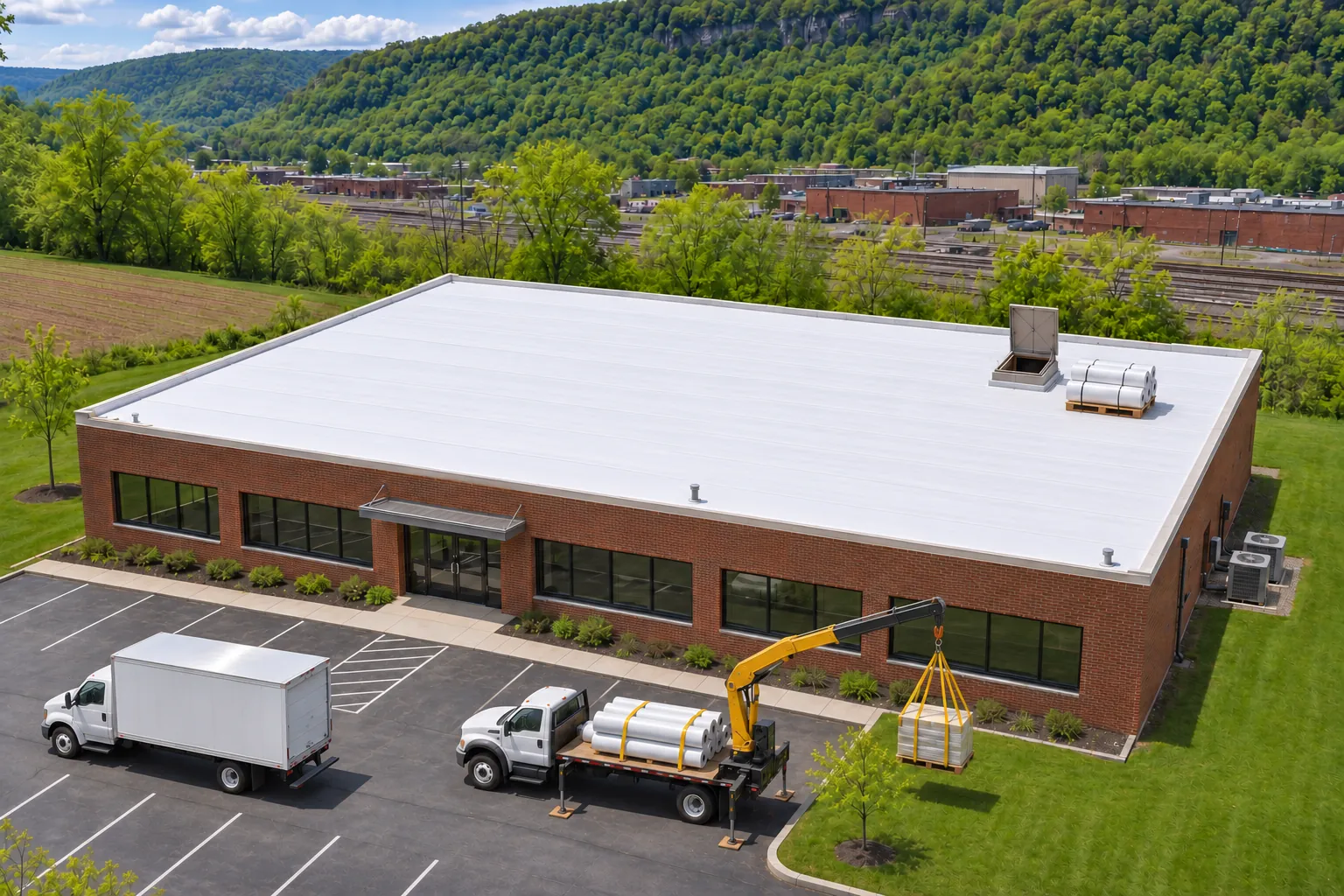
Covers seams, drains, curbs, flashing and deck.White membrane welded and probed, with the attachment pattern and tapered board layout recorded before the field is covered.
About TPO roofing
Indiana commercial roofing for warehouses, shops, and offices in Indiana, PA: we install new TPO, EPDM, and metal roofs and hand over full system records.
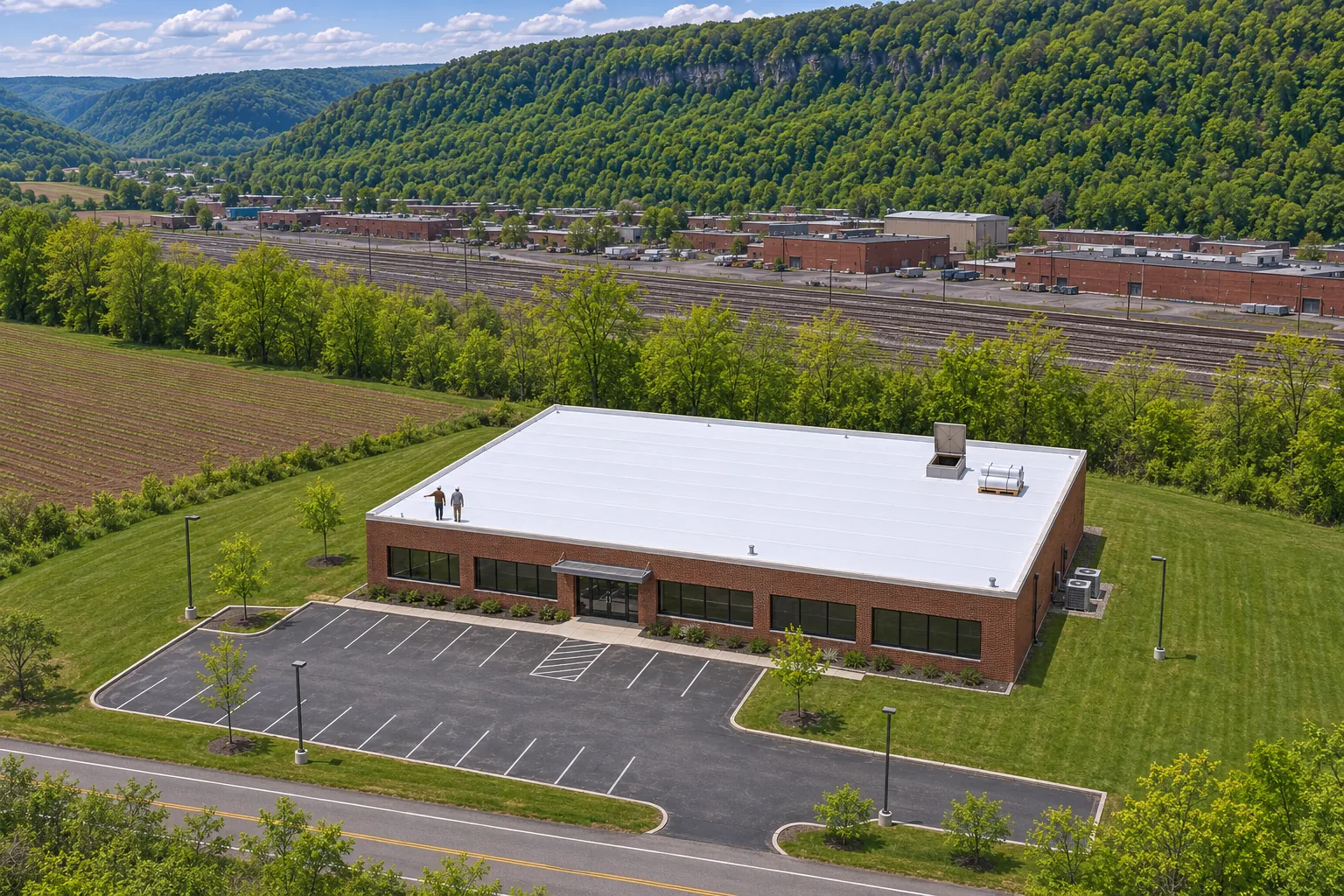
Indiana commercial roofing work does not stop at the last weld. The closeout package is what later crews use to match repairs to your roof.
A finished roof hides most of its construction: the insulation type and thickness, the attachment pattern, the tapered layout, and the flashing at each curb. Without records, the next repair crew guesses.
We keep notes and photos as the roof goes on and turn them into a package at closeout. It names the products, shows the roof layout, and marks the access limits a future crew should know.
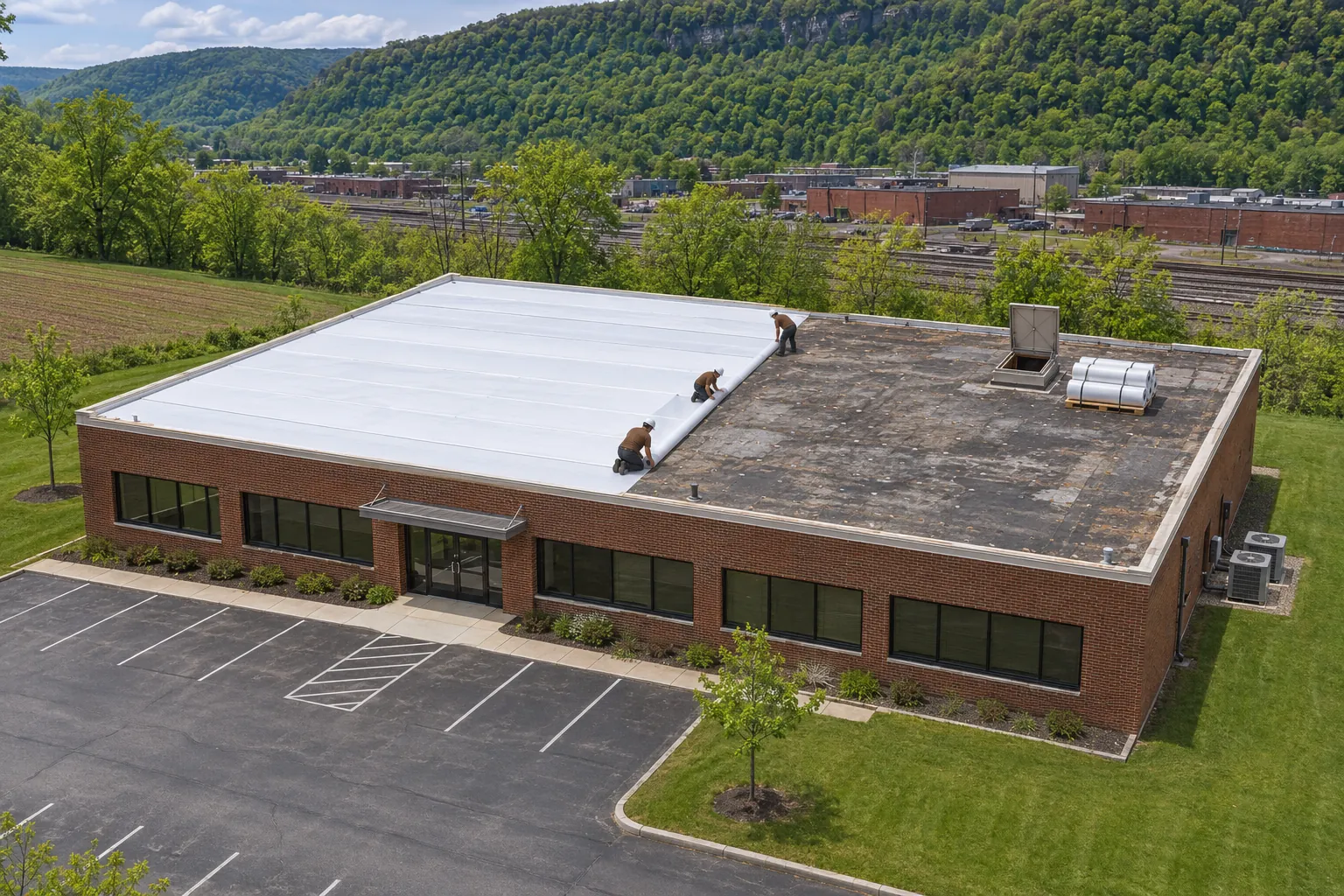
Each system below comes with the same closeout records.
White membrane welded and probed, with the attachment pattern and tapered board layout recorded before the field is covered.
About TPO roofing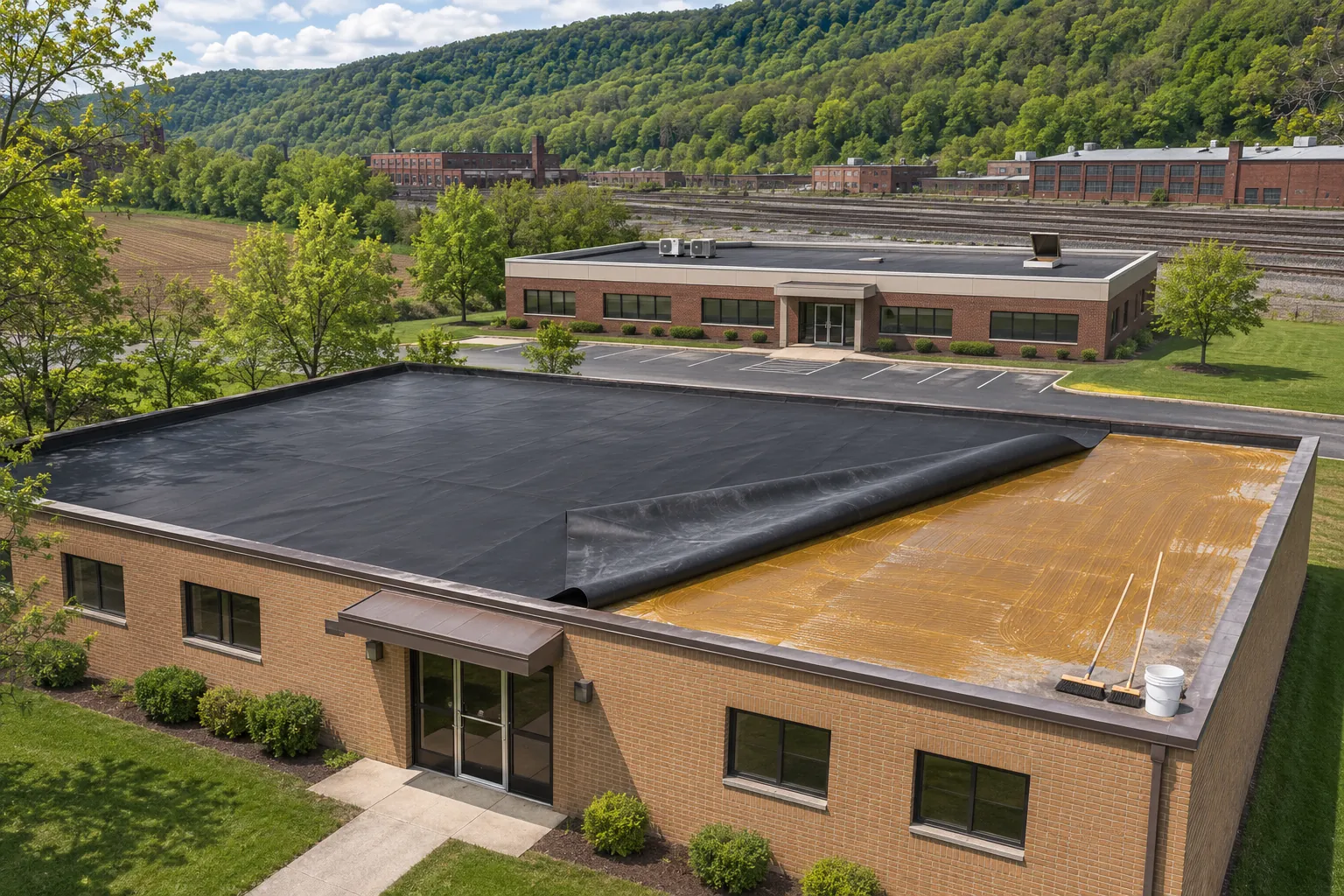
Rubber roofs whose wall terminations, boots, and drain details get photographed and listed for future repair crews.
About EPDM roofing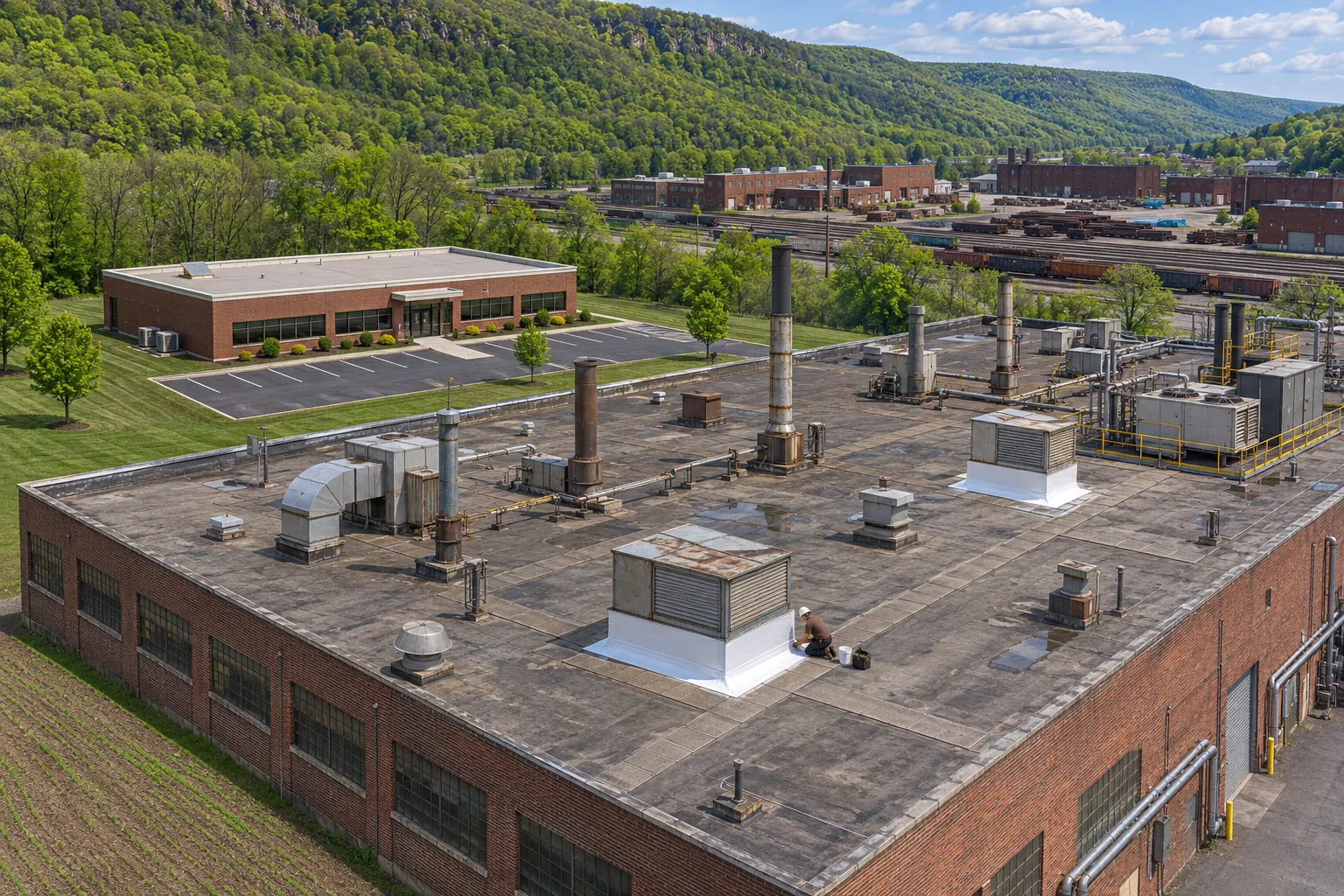
Plant reroofs logged phase by phase, so each bay's deck repairs and curb details stay on record.
About industrial roofing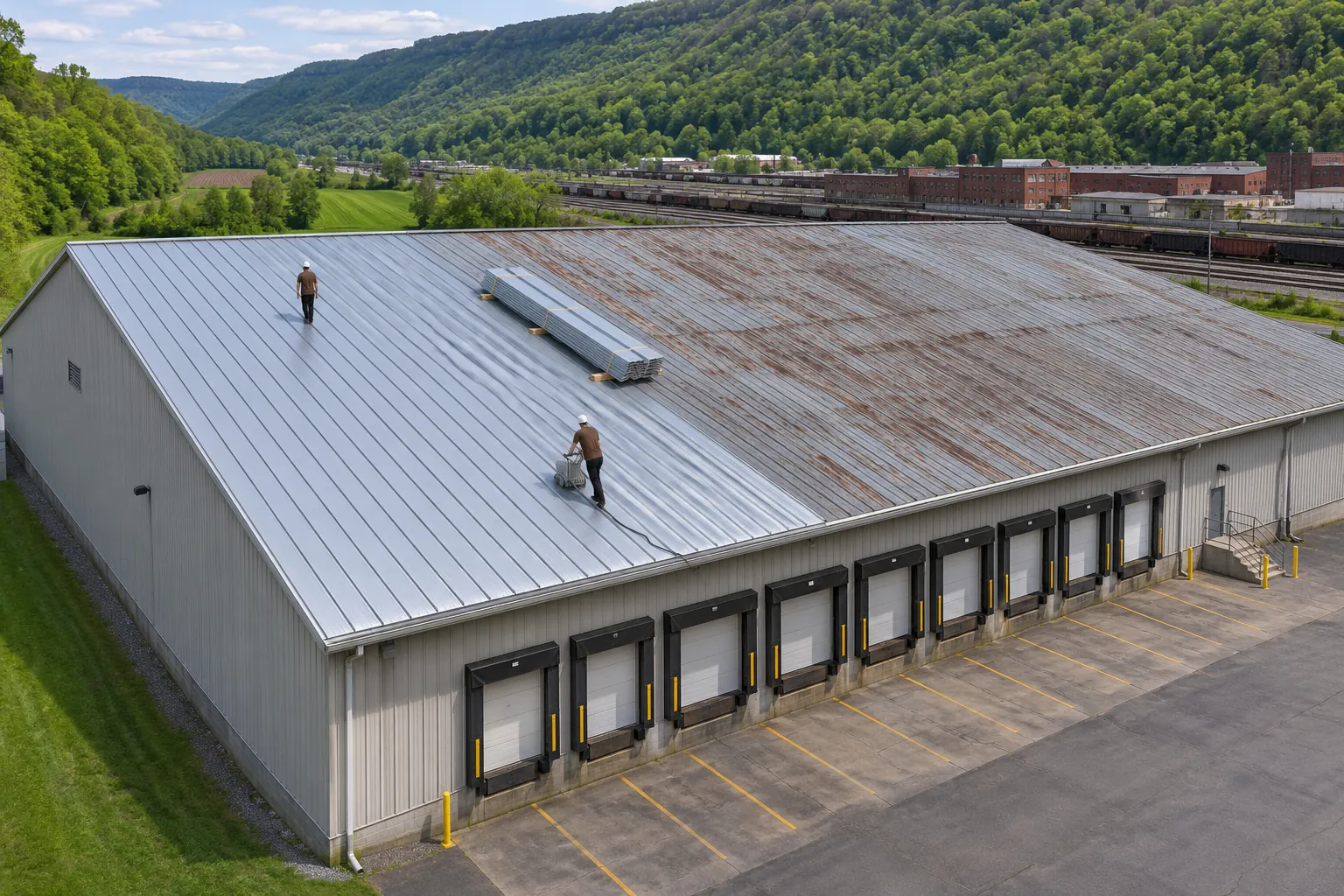
Standing-seam and panel roofs recorded by profile, gauge, finish, and clip layout, so replacement parts can be matched later.
About metal roofingThese conditions show up on warehouse roofs in the area, and several trace back to missing records.
Patches in the wrong material peel off within a season. Knowing the installed membrane prevents that mistake.
When an old roof sits under a newer one, water can travel between the layers before it shows inside.
Old interior drains get abandoned and new ones cut in. Ponding often forms at the forgotten spot.
Equipment swapped after the roof went on often leaves curbs flashed with sealant only.
Without records, nobody knows if the board is wet or dry until cores are taken.
Gaps between coping sections let water into the wall and down behind the base flashing. A reroof replaces the coping and records its joint layout for later checks.
Old drawings or past invoices help. Send what you have, and the roof walk fills in the rest.
Schedule Your Free InspectionDocumentation runs alongside every step of the install.
Cores and photos capture the existing layers before any tear-off begins.
The proposal names products, thicknesses, and attachment, so the records match the contract.
Deck repairs, tapered layouts, and curb flashing get photographed before the next layer covers them.
A plan view shows drains, curbs, slopes, walkways, and any access limits on the roof.
You receive the records, photos, and product information in one set at the final walk.
What changes for the owner and for the next crew on the roof.
Indiana is one of five towns we serve beyond our Altoona base.
Property in a town not listed? Call us or send us a message.
| Town | County | What We See On Roofs There |
|---|---|---|
| AltoonaHome Base | Blair County | Brick railcar shops, grocery distribution warehouses, and church halls with long flat roof fields. |
| Johnstown | Cambria County | Repair shops and plants where reroof staging has to work around large equipment deliveries. |
| Latrobe | Westmoreland County | Church halls and meeting spaces where entrances must stay usable around scheduled events. |
| DuBois | Clearfield County | Warehouse roofs where drains, slope, and temporary water routes need planning during replacement. |
| Huntingdon | Huntingdon County | Leased commercial buildings where owner and tenant agree on access and interior protection first. |
Answers for warehouses and shops in Indiana, PA.
Keep the installed system information, the roof layout, and the documented details. Later crews use them to pick compatible repairs and understand concealed work, instead of judging the roof by its surface. We include materials and access limits in the closeout.
Repairs fail when the patch material does not match the membrane or the crew misses a hidden detail. Records name the membrane, attachment, and flashing, so the next repair starts from facts. That saves time on every service call and keeps repairs compatible with the installed system.
Cores first, then a written scope for tear-off or recover, insulation, membrane or panels, flashing, and edge metal. Stock below gets protected section by section, and the closeout package records each part of the new roof.
Cores and moisture readings show the layers, the insulation type, and whether it is wet. We note each core location on the roof layout so the findings stay useful after the job. Each core hole gets patched before we leave the roof.
Drains, scuppers, curbs, walls, walkways, slopes, and the edges of each roof area, plus notes on access limits. It is a working sketch for maintenance crews, kept with the system records. A copy stays at the building so a new facility manager can find it.
Buyers and tenants often ask what roof is on the building. A closeout package with products, dates, and layout answers that quickly and shows what was installed. It also lets an inspector or insurer see how the roof was built without cutting into it.
Tell us about the warehouse and any records you already have. We will inspect the roof and plan a replacement that ends with a full closeout package.