EPDM Rubber

Altoona EPDM Roofing Contractor

Rubber Membrane That Keeps Water Out Through Long Freezing Winters

As an Altoona EPDM roofing contractor, we replace worn rubber roofs with new EPDM sheets, taped seams, and rebuilt flashing on low-slope buildings.

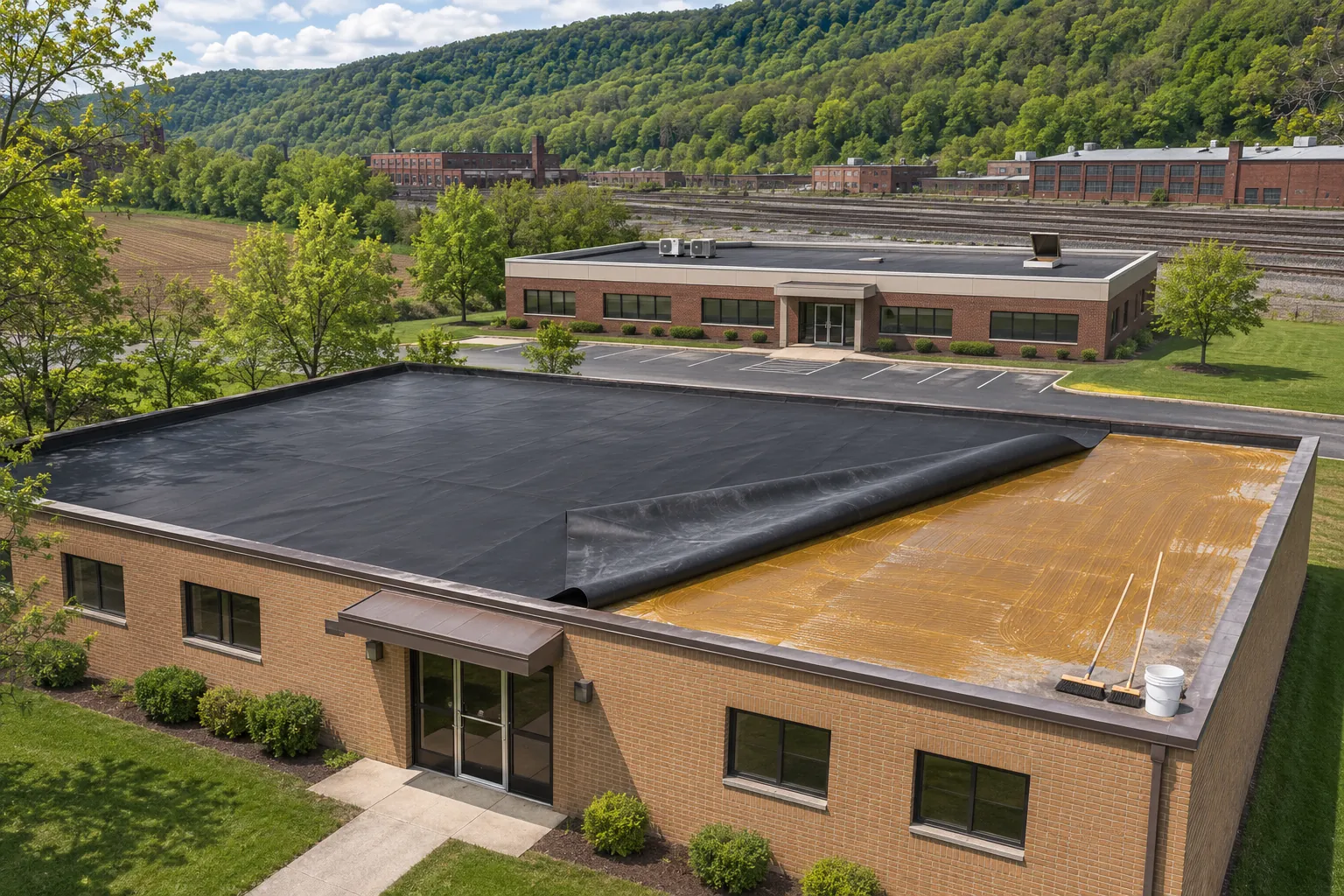
Drone view of a tan brick building with a black EPDM sheet folded back over fresh bonding adhesive on the deck, with wooded ridges behind
  • MembraneBlack synthetic rubber
  • SeamsPrimed seam tape
  • AttachmentAdhered or fastened
  • Common OnHalls, brick shops, additions

EPDM Roofing Compared for Altoona Low-Slope Buildings

Altoona EPDM roofing sits between two other membranes owners often ask about. Here is how they line up.

What We Install

EPDM Rubber

Flexible black single-ply

Seams
Primed and joined with seam tape
Cold weather
Stays pliable through freezing weeks
Strong fit
Church halls, shops, low additions
Watch for
Lap edges and flashing that age first
Repairs
Tape and patch on primed rubber

TPO Membrane

White heat-welded sheet

Seams
Fused with hot air
Cold weather
Stiffer in deep cold
Strong fit
Large warehouses with many units
Watch for
Punctures near equipment
Repairs
Welded patches on clean membrane

Modified Bitumen

Asphalt sheets in layers

Seams
Torched or cold-applied laps
Cold weather
Brittle when old and cold
Strong fit
Small roofs with heavy foot traffic
Watch for
Granule loss and cracked laps
Repairs
Hot or cold patch plies

Building movement, the number of roof penetrations, and how the deck can take attachment all shape the choice on a given roof.
When an Altoona Rubber Roof Needs EPDM Roofing Work

Rubber roofs tend to fail at their edges and seams first. These signs tell us how far the damage reaches.

  • Seam Tape Lifting at Laps

    Repair First

    Open laps let water travel under the sheet. One or two can be repaired; open laps across the field point to EPDM roof replacement.

  • Shrinking Membrane at Walls

    Watch

    Rubber that has pulled tight at walls and curbs stretches its flashing until it tears. Bridged corners are an early sign.

  • Ceiling Stains Below the Field

    Call Now

    Stains away from walls and drains usually mean water is under the membrane. Cores show how much insulation is wet.

  • Clamping Rings Leaking at Drains

    Repair First

    Loose drain clamps and dried rubber at the bowl let meltwater past. New drain inserts and flashing fix that detail.

  • Cracked Pipe Boots and Pitch Pans

    Watch

    Older boots split in the cold, and pitch pans dry out. Each gets replaced with a molded or field-built rubber detail.

What an Altoona EPDM Roofing Replacement Covers

The written scope names each of these parts.

  • Removal Limits

    Which layers come off, which stay, and how wet board found during tear-off gets handled and priced.

  • Insulation Board

    New polyiso to the energy code, with tapered sections and crickets that send water to drains and scuppers.

  • Sheet Thickness and Width

    The rubber thickness and roll width chosen for the roof, with fewer field seams on wider sheets.

  • Adhered or Fastened Attachment

    Bonding adhesive across the deck or plates at the laps, picked from the deck type and the building height.

  • Perimeter and Penetration Flashing

    Uncured rubber at corners and boots, cured flashing up walls, termination bars, and new edge metal.

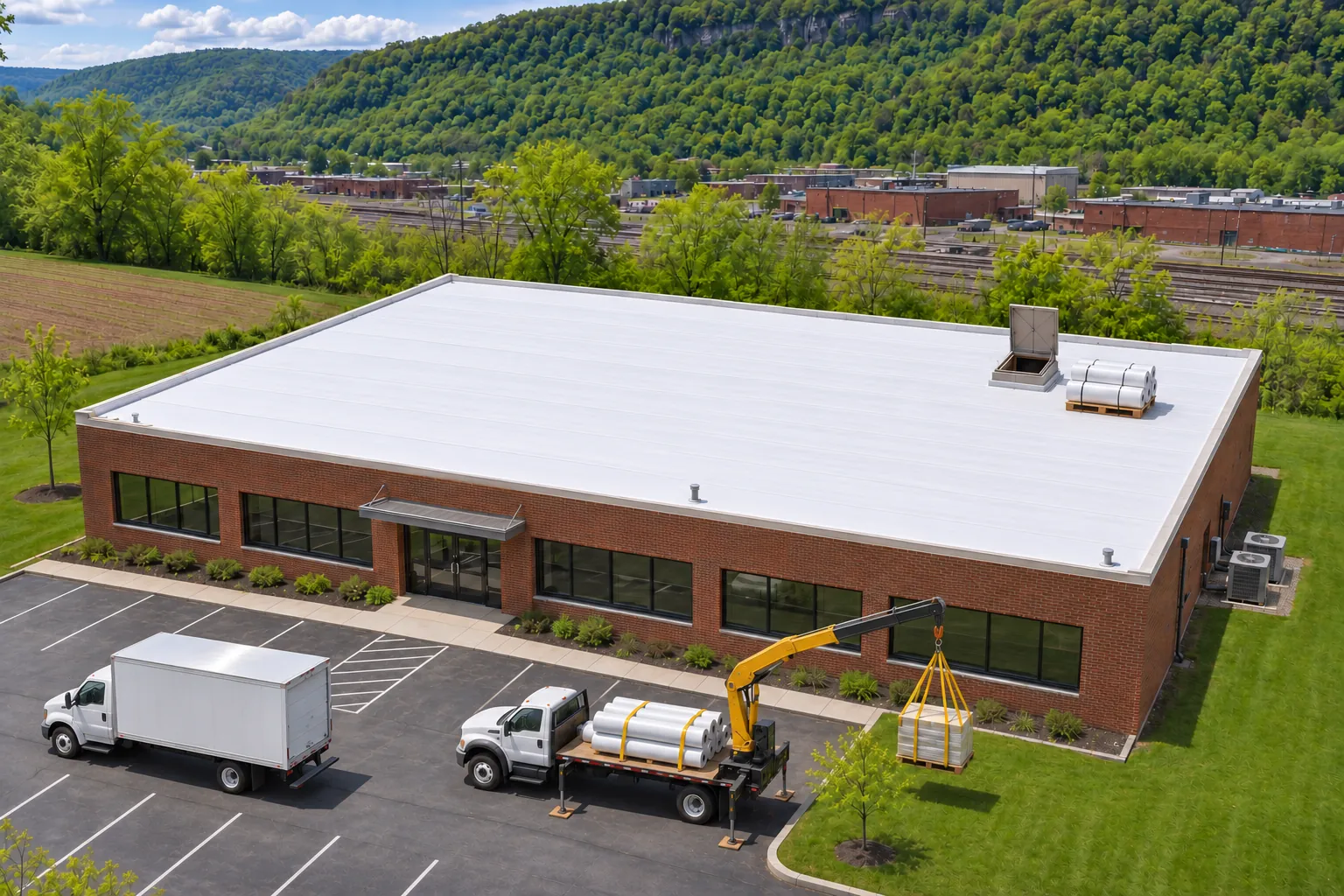
Drone view of a plain flatbed with a loader crane lifting membrane rolls to a brick building roof beside a plain white box truck

Altoona, PA EPDM Roofing Estimates Start on the Roof

Hidden wet board and tricky transitions change the price more than floor area does. We look before we quote.

Schedule Your Free Inspection

How a Rubber Roof Gets Replaced

Rubber goes down in the same order on every section of the roof.

  1. Core and Map Wet Areas

    Moisture readings and cores mark the board that has to go, so the tear-off plan matches what is under the sheet.

  2. Remove the Old Membrane

    The day's section comes off, the deck gets checked, and damaged deck is replaced before insulation goes back.

  3. Lay Board and Tapered Crickets

    New insulation goes down with tapered pieces at drains, then cover board where the system calls for it.

  4. Roll Out and Bond the Rubber

    Sheets relax in place, then get adhered or fastened, and laps are primed and joined with seam tape.

  5. Flash Every Edge and Opening

    Walls, curbs, pipes, and drains get rubber flashing and terminations, and a final walk checks each lap.

What New EPDM Changes on the Roof

The roof reads very differently after a full rubber replacement.

Before Reroofing

  • Seam tape curling at the field laps
  • Rubber bridged tight across inside corners
  • Wet board under soft spots
  • Pipe boots split from the cold
  • Ceiling stains after each thaw

After Reroofing

  • Fresh primed laps with new seam tape
  • Relaxed sheets with corner flashing in place
  • Dry insulation sloped to drains
  • Molded boots at every pipe
  • Terminated flashing up each wall

More Roofs We Install Near Altoona

If rubber is the wrong match for your building, one of these usually fits.

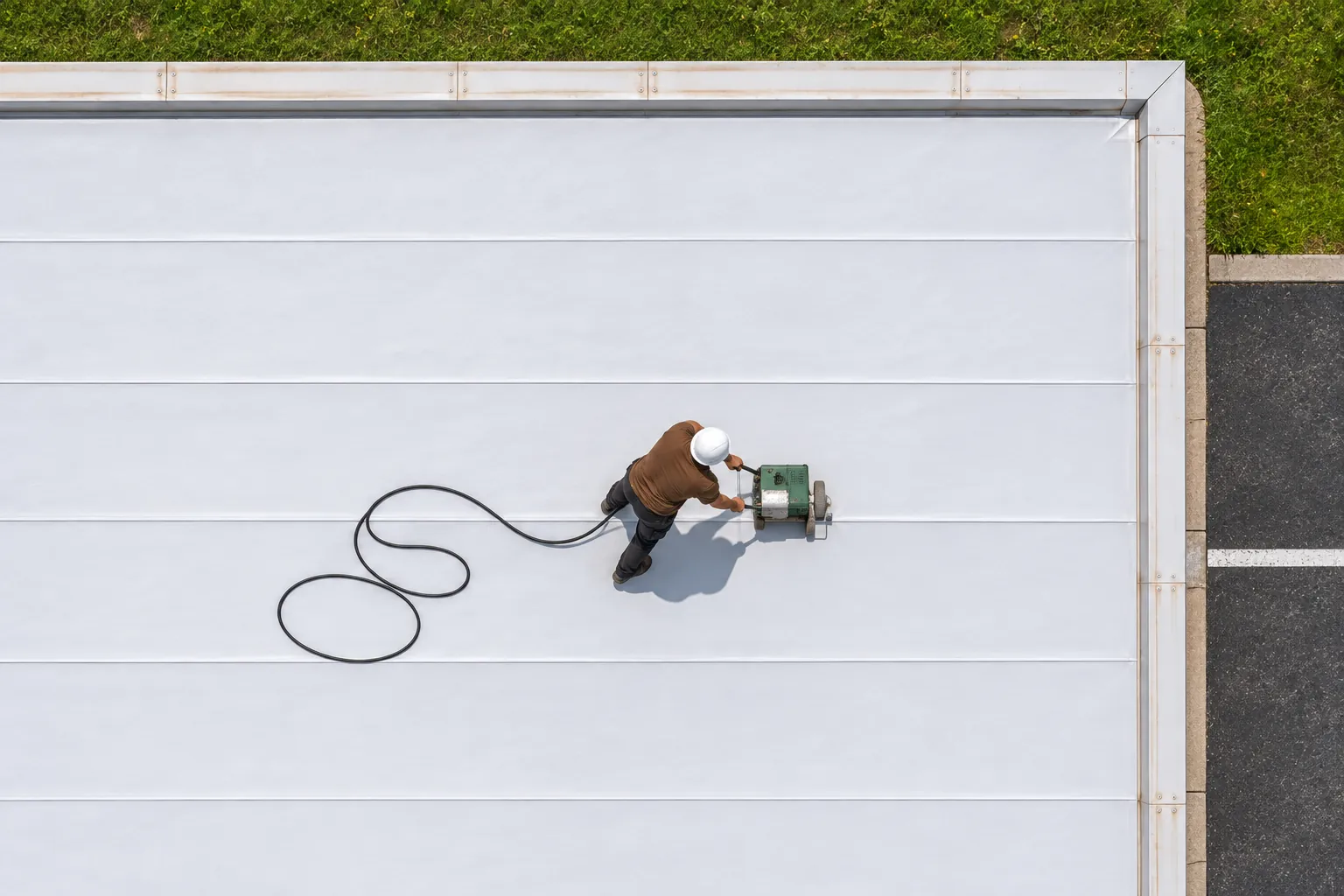
Top-down view of a roofer in a white hard hat running a hot-air welder along a seam on a white TPO roof near the parapet

TPO Membrane Roofing

Covers seams, drains, curbs, flashing and deck.

White welded membrane for larger flat roofs with many curbs, where a reflective surface and fused seams suit the building better.

Read about TPO
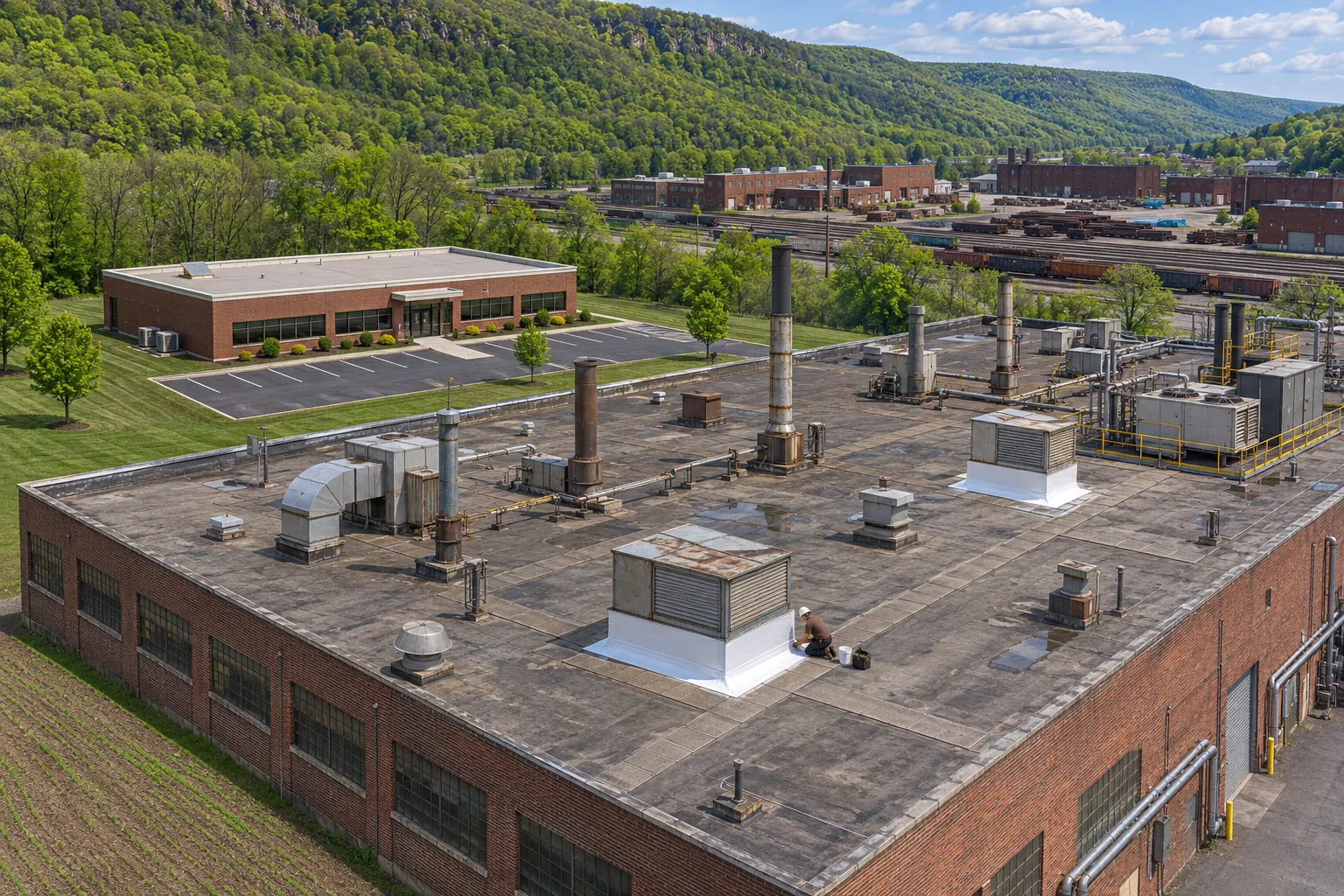
Drone view of a brick industrial roof crowded with exhaust stacks, ducts, and rooftop units, with a roofer flashing a new curb and a rail yard behind

Industrial Roofing

Covers seams, fasteners, drains, curbs, flashing and deck.

Roof replacement on shops and plants scheduled in phases so exhaust, cranes, and production keep running below the work.

Read about industrial roofing

EPDM Questions From Church and Shop Owners

Six answers about rubber roofs, their cost, and their age.

The Material

What Is EPDM Roofing?

EPDM is a synthetic rubber membrane made in large sheets, usually black, and joined at the laps with primer and seam tape. It stays flexible in deep cold, which suits low-slope roofs that move with temperature, and it works as part of an assembly with insulation, attachment, and flashing.

How Is EPDM Different From a Liquid-Applied Surface?

EPDM arrives as factory-made sheets that are joined and detailed as one membrane. A liquid surface is brushed or sprayed on in place. When comparing proposals, look at the attachment, seams, and flashing listed, since those connections drive performance more than the look of the finished surface.

Cost and Age

What Sets EPDM Roofing Cost?

Roof size, sheet thickness, insulation, the number of tear-off layers, deck repairs, edge metal, flashing, equipment, access, staging, and season. Two halls with the same floor area can price differently once hidden wet board or difficult transitions show up during the inspection.

Does the Average Lifespan of an EPDM Roof Set the Replacement Date?

An average figure says little about one roof. We check seams, attachment, flashing, and moisture, and look at the repair history. An older roof that is dry and well kept is a different decision from a younger roof with wet insulation across the field.

Church Halls

When Should a Church Hall Replace EPDM Instead of Renewing Flashing?

Replacement makes sense when damage reaches past the flashing into the field membrane or the insulation under it. If the field is dry and the seams hold, new flashing at walls, curbs, and drains can be the right job, and the cores show which case applies.

Can Services Continue During an EPDM Roof Replacement?

Usually, with planning. We agree on work hours around scheduled services, keep entrances clear of staging, and protect the sanctuary or hall below each open section. Adhesive odors are managed by working away from air intakes during occupied hours.

Read all thirty questions on the FAQ page

Hire an Altoona EPDM Roofing Contractor

Tell us where the rubber roof leaks and how old it is if you know. We will check the seams and cores and put the EPDM scope in writing.

Call Us (814) 679-7043