
TPO Over Tenant Spaces
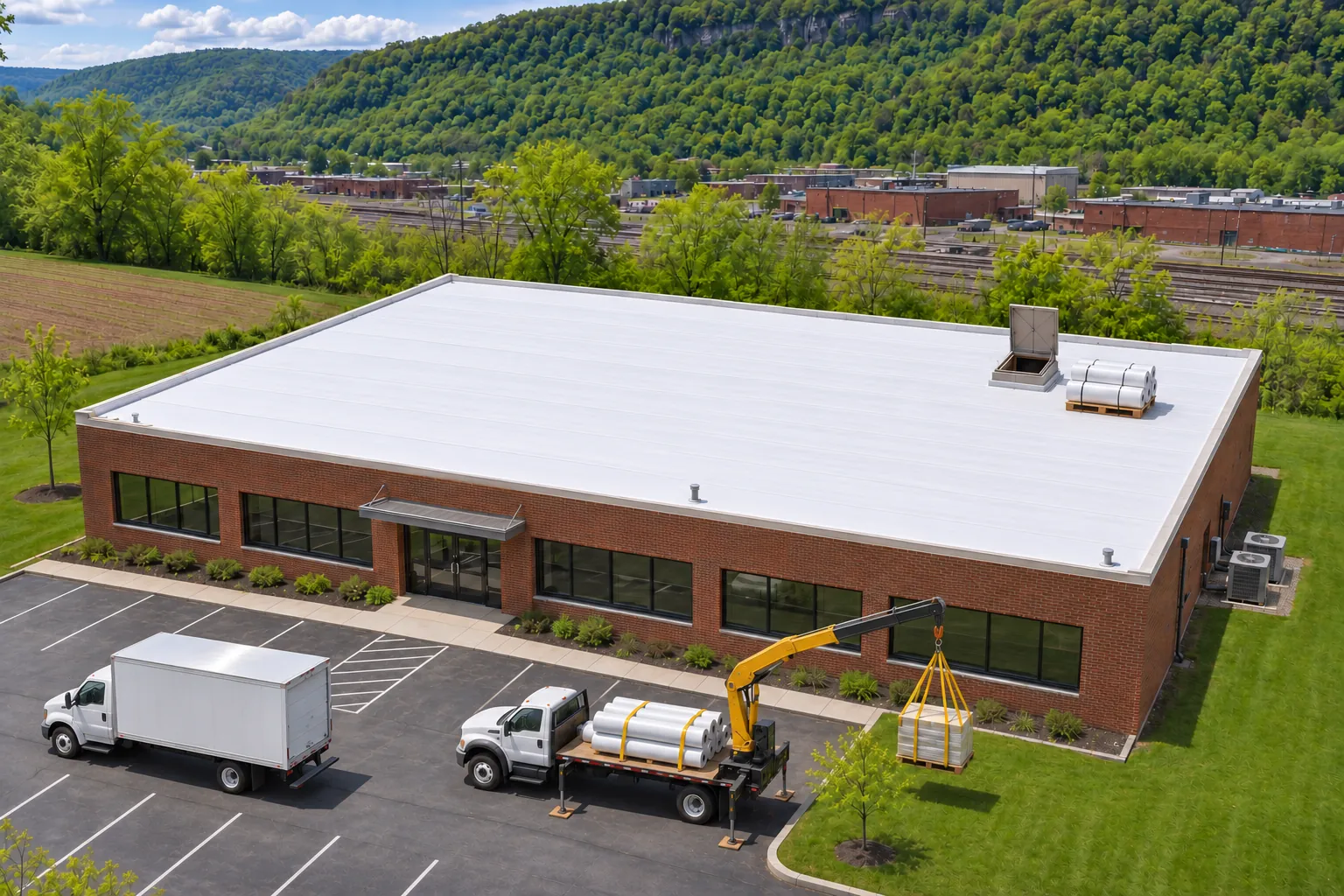
Covers seams, drains, curbs, flashing and deck.Welded white membrane installed section by section above each tenant space, with each area closed before evening.
TPO roofing
Huntingdon commercial roofing for leased shops, offices, and warehouses: we install new TPO, EPDM, and metal roofs with a plan both owner and tenant can follow.
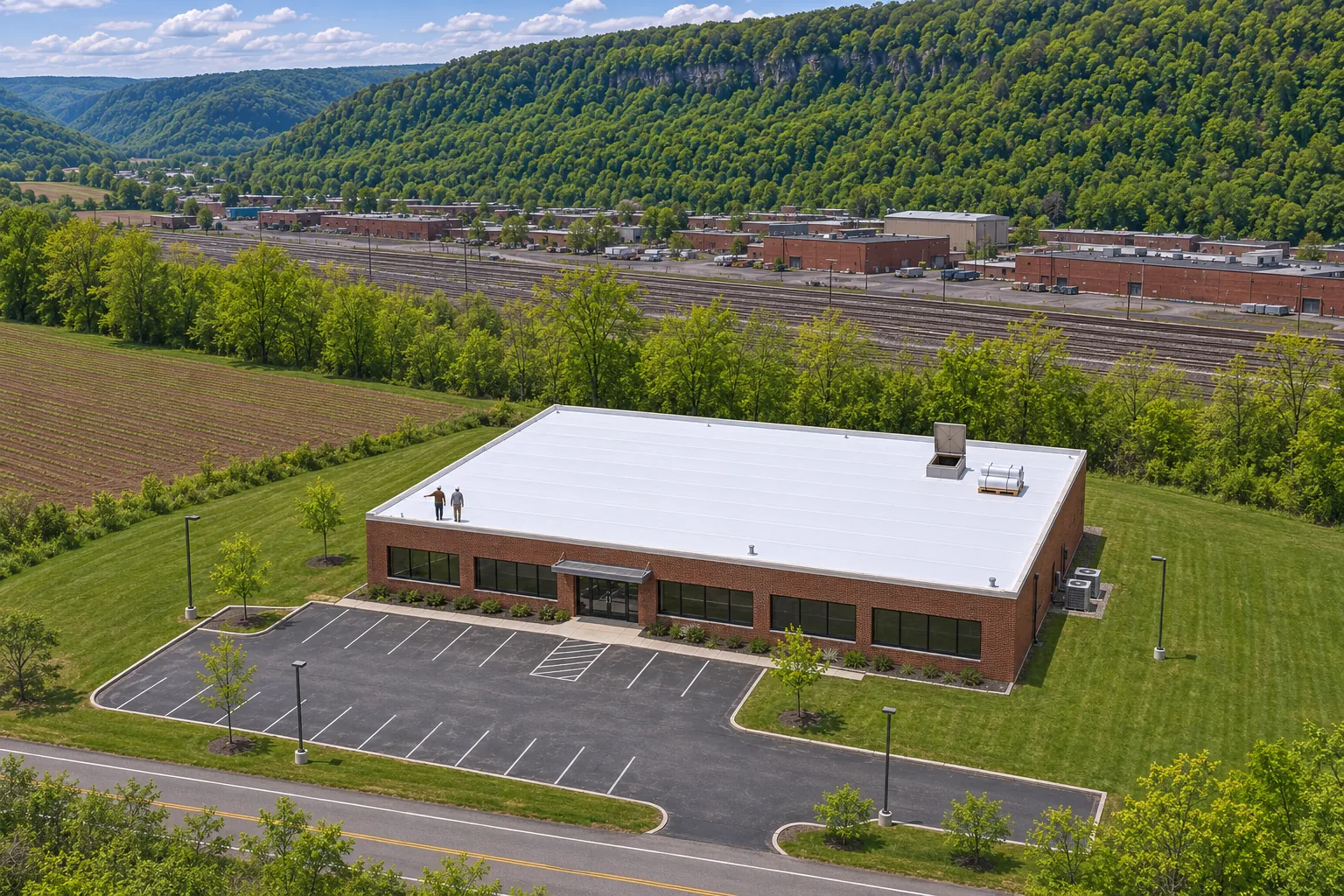
Huntingdon commercial roofing on a leased building works best when owner and tenant agree on access, protection, and hours before the first tear-off.
We explain the planned sequence to both parties: which areas sit under each section, when equipment needs shutting down, and where materials will be staged. That lets the tenant plan staff and stock around the work.
The lease decides who pays for what and who must approve access. We point owners to those terms early, since a roofing plan cannot settle them, and we work from whatever the two parties agree.
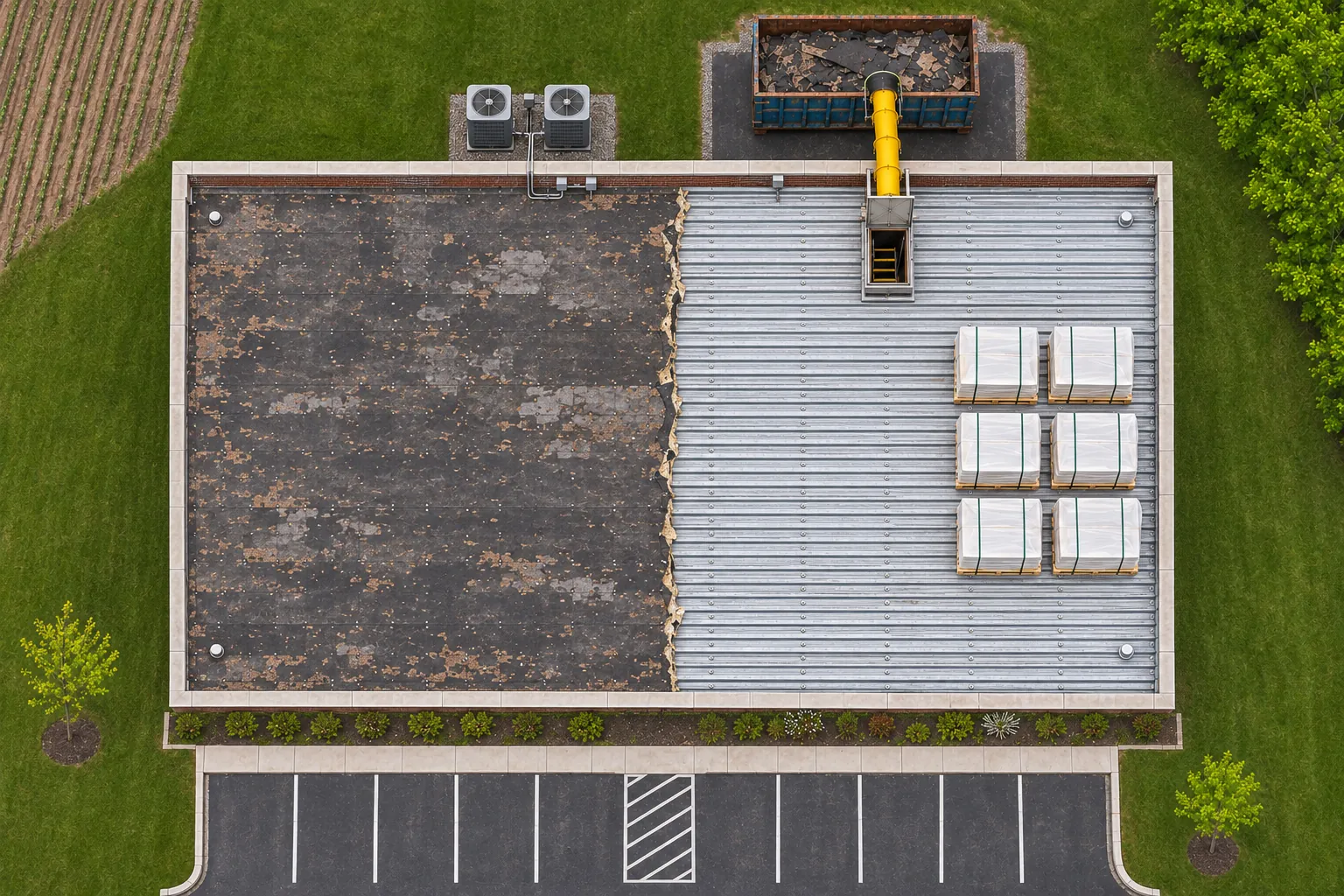
The four systems we install, described for leased buildings.
Welded white membrane installed section by section above each tenant space, with each area closed before evening.
TPO roofing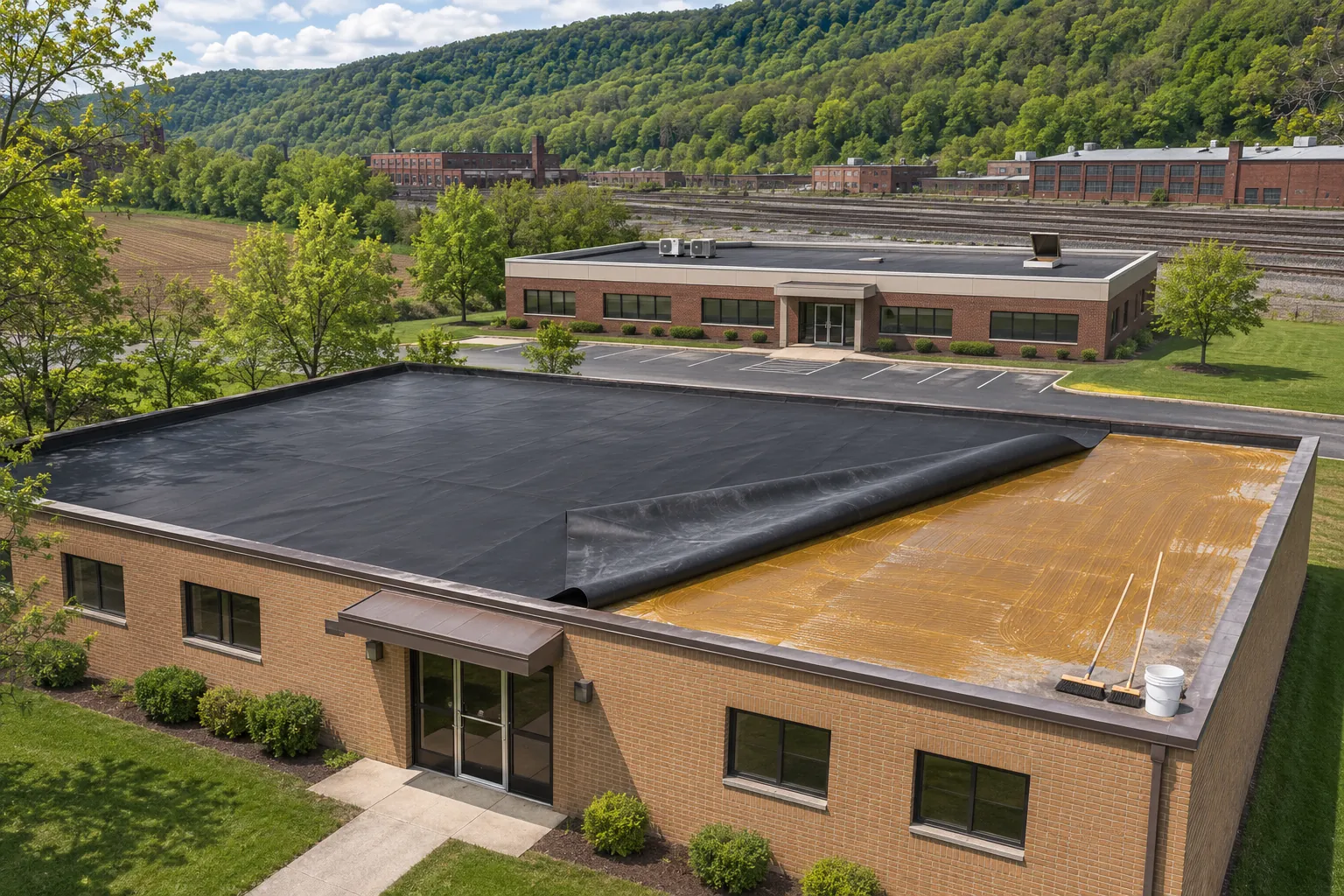
Rubber roofs for older downtown buildings and additions, with new flashing at party walls and parapets.
EPDM roofing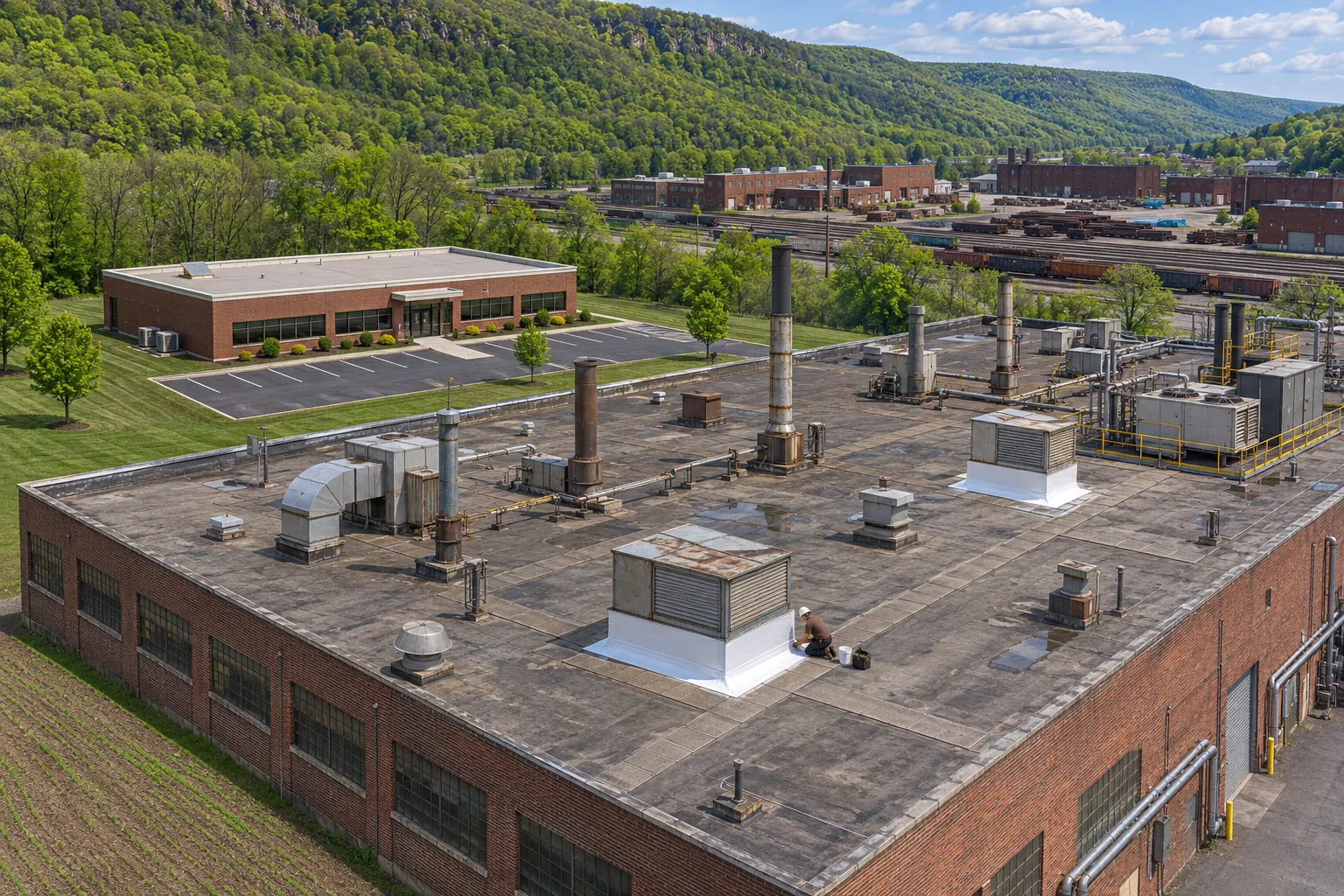
Phased replacement over leased production or storage space, timed with the tenant's shifts.
Industrial roofing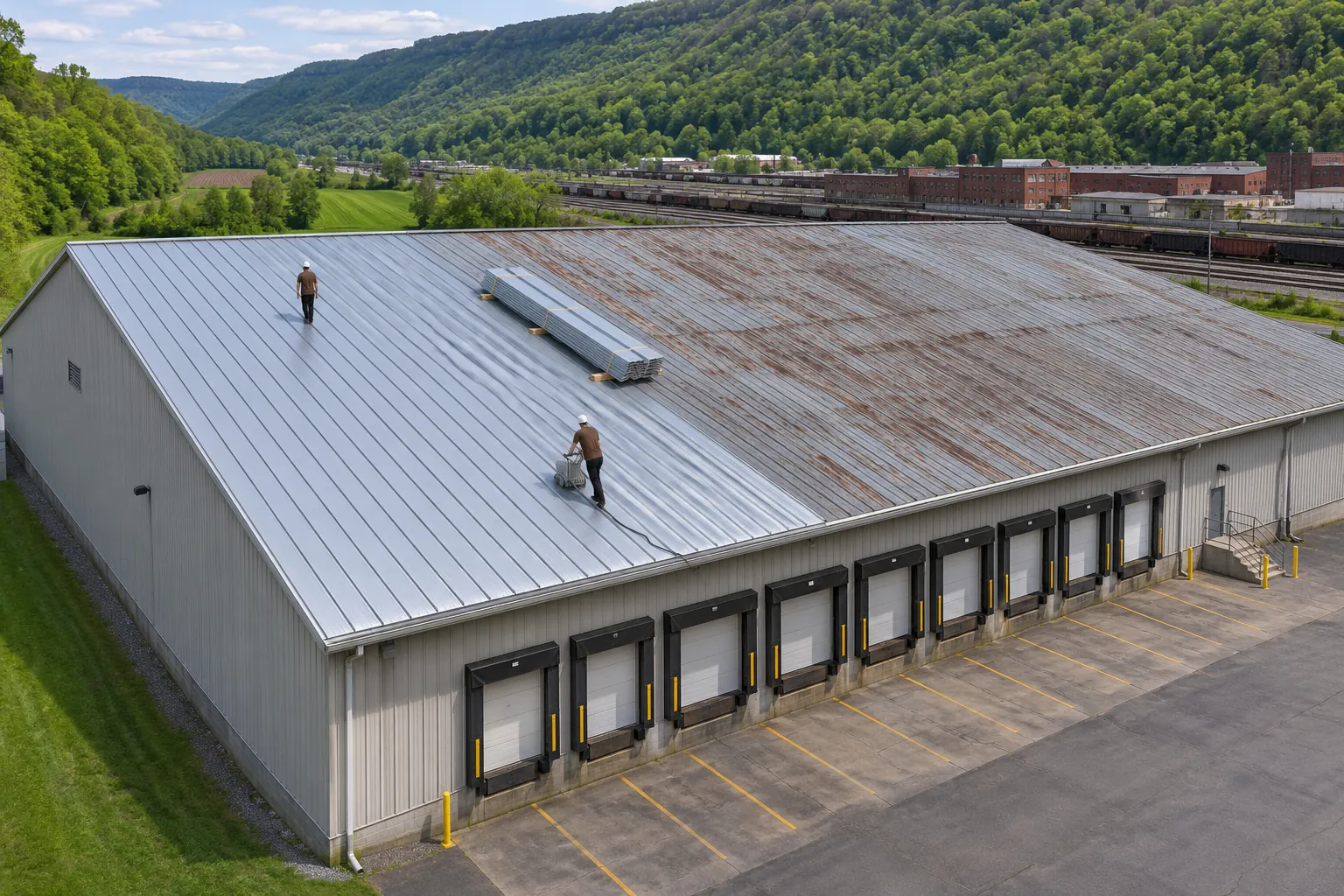
Panel replacement or standing-seam retrofits on metal warehouses, with lift times set around tenant loading.
Metal roofingThese conditions often start the owner and tenant conversation about a new roof.
Repeated leak calls from a tenant space usually mean wet insulation spreading under the membrane.
Where two buildings share a wall, the flashing between roofs ages first and lets water into both.
Units installed for a tenant often sit on curbs flashed with sealant only, which fails within a few seasons.
Seams that crack when walked on show a membrane past repair across the field.
In shared buildings, roof drains can go unchecked for years until water backs up.
Older parapets lose coping fasteners and joint seals, letting water into the wall above a tenant space. Coping gets reset or replaced with the new roof.
Bring the tenant contact to the roof walk, and the plan reflects both sides from the start, including work hours and protection for each space.
Schedule Your Free InspectionOwner and tenant stay informed at each step.
We core the roof and walk the spaces below with the owner and the tenant contact.
Both parties get the same plan: sections, dates, hours, staging, and equipment shutdowns.
Covers and dust control go up under each section in the agreed areas before tear-off.
Each area is opened, insulated, and covered within the shift, keeping the tenant's space dry.
The final walk and records go to the owner, with a summary the tenant can keep.
What changes for the owner and the tenant once the work is finished.
Huntingdon joins Altoona and four more towns on our coverage list.
Building somewhere else? Call us or send us a message.
| Town | County | What We See On Roofs There |
|---|---|---|
| AltoonaHome Base | Blair County | Brick railcar shops, grocery distribution warehouses, and church halls with long flat roof fields. |
| Johnstown | Cambria County | Repair shops and plants where reroof staging has to work around large equipment deliveries. |
| Indiana | Indiana County | Warehouses that need clear closeout records so later crews can match repairs to the installed system. |
| Latrobe | Westmoreland County | Church halls and meeting spaces where entrances must stay usable around scheduled events. |
| DuBois | Clearfield County | Warehouse roofs where drains, slope, and temporary water routes need planning during replacement. |
Answers for owners and tenants of leased commercial buildings.
Yes. Access, interior protection, and operating limits should be agreed before work begins. We explain the sequence so both parties see the practical effect, and the lease, which they should check, decides who is responsible for what.
The lease answers that, and we do not interpret it. We give both parties the same scope, schedule, and protection plan so their decision rests on clear facts. Change orders go to whichever party the lease names as responsible.
Plastic covers over stock and equipment, dust control near open sections, and bucket or tarp setups under any area at risk. The tenant tells us what is sensitive, and the plan reflects it. Protection stays in place until the section above is closed and checked.
Most tenants stay open. The space under the active section may need some limits for part of a day, and both parties hear about it in advance. Adhesive odor and noisy tear-off are scheduled away from customer hours where we can.
A shared schedule, tenant contacts for each section, agreed work hours, and protection details per space. The roof work itself follows the same scope as any other building. Access keys, alarm codes, and loading times are collected before the first day.
Yes, during the reroof. Units added for a tenant often sit on curbs with sealant instead of flashing, and the new roof brings each curb up to proper height. The tenant's mechanical contractor handles the disconnects and reconnections.
Send the address and the tenant contact if there is one. We will inspect the roof, walk the spaces below, and share one written plan that owner and tenant can both follow.