Owner Questions

Altoona Commercial Roofing FAQ

Straight Answers on Membranes, Metal, Weather, and Scheduling

Our Altoona commercial roofing FAQ collects thirty questions owners ask about TPO, EPDM, metal and industrial roofs, weather, permits, and nearby towns.

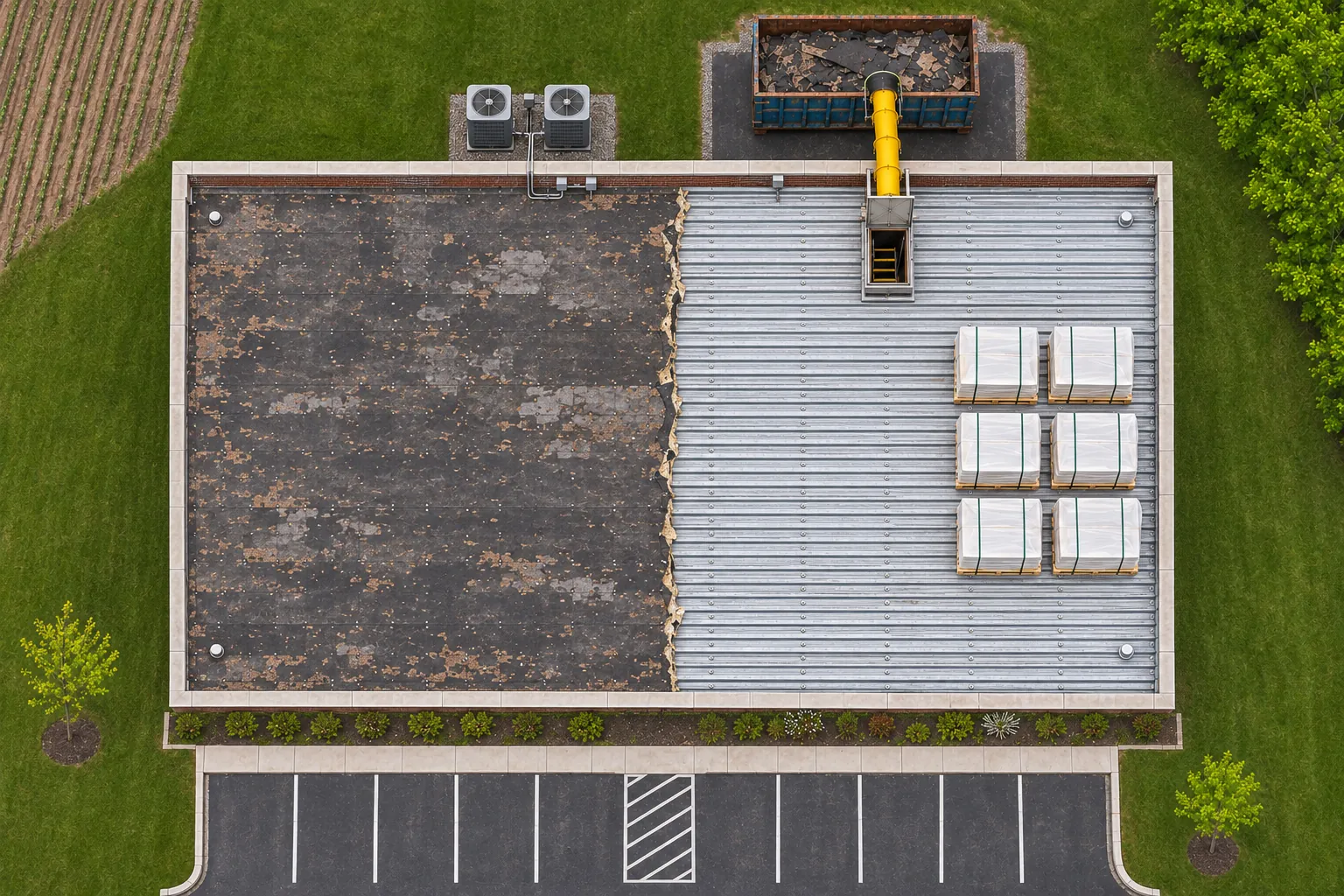
Top-down view of a flat roof mid tear-off, half old surface and half bare steel deck, with insulation bundles, a debris chute, and a dumpster

Topics in the Altoona Commercial Roofing FAQ

The Altoona commercial roofing FAQ is split into seven topics. Each answer about a code or permit links to its primary source.

Deciding on a New Roof for an Altoona Building

Remaining roof life, inspections, church halls, and work during a winter shutdown.

How can a railcar shop judge whether its commercial roof has useful life left?

A railcar shop can judge remaining roof usefulness through inspection of the covering, connections and underlying materials. We compare current findings with leaks and past repairs rather than rely on age alone. On an Altoona, PA building, roof areas in good condition can remain serviceable while damaged equipment details need work, so the recommendation should distinguish those conditions.
What should an Altoona business expect from a commercial roofing contractor's inspection?

An Altoona, PA business should expect an inspection that connects roof findings to a clear proposed scope. We examine drainage, seams, flashing and available evidence of moisture, then identify uncertainties needing further investigation. The resulting recommendation should explain why materials can remain or need replacement, along with access and operating constraints that affect construction.

Is a church hall roof treated as commercial roofing work?

A church hall roof is within the commercial roofing work addressed here, with its assembly and use guiding the approach. We review occupancy schedules, drainage, access and protection of interior spaces before recommending materials. The building's function leaves the roof type open, so the scope should reflect the actual covering and supporting construction.

Can an Altoona warehouse replace its roof during winter shutdown?

A warehouse can replace roofing during a winter shutdown if safe access and the selected system's installation conditions can be maintained. We plan around moisture, temperature and daily weather protection rather than assume the shutdown dates are sufficient. For Altoona, PA work, a usable schedule must leave room for conditions that prevent opening or completing roof sections.

TPO Membrane Questions From Altoona Owners

Welds at level changes, grocery warehouse assemblies, curb-heavy pricing, and recovering over old layers.

Why does TPO welding need extra attention at changes in roof level?

TPO welding needs attention at changes in level because corners and transitions can restrict access and complicate the seam. We plan the sheet and flashing arrangement before installation, then check the completed connections. A clean-looking transition still needs proper welding conditions and inspection, especially where the lower roof receives water from above.

What does a TPO system contribute to a grocery warehouse roof?

A TPO system provides a thermoplastic single-ply covering with welded seams as part of the grocery warehouse's roof assembly. We design the supporting insulation, attachment and flashing around that membrane. Its suitability depends on the whole arrangement, including drainage and equipment access, rather than treating the membrane sheet as a complete roof by itself.

What drives TPO installation cost on a roof with several equipment curbs?

Installation cost for TPO reflects the complete roof and the detailing around its equipment curbs. A roof inspection sets the price after we assess area, system and thickness, insulation, tear-off layers, deck repairs, edge metal, flashing, equipment, access, staging and season. The number of curbs matters through the actual work required rather than a generic roof-area calculation.

Could new TPO be installed above a grocery warehouse's existing roof layers?

New TPO can go above an existing assembly only when the retained materials and proposed construction are fit for it. We investigate moisture, attachment and the roof's existing layers before recommending that approach. Curbs, edges and drains must also work with the new arrangement, so avoiding removal requires more than an apparently dry top surface.

EPDM Rubber Roof Questions for Blair County Buildings

Flashing work versus replacement, sheet construction, price differences, and roof age.

When should a church hall replace EPDM instead of renewing its flashing?

A church hall should consider EPDM replacement when deterioration extends beyond flashing into the membrane or underlying assembly. We investigate moisture and the condition of seams before determining the scope. If the roof field remains in good condition, targeted flashing work can be reasonable; widespread weakness changes the case for continued localized repairs.

How is EPDM rubber roofing different from a liquid-applied roof surface?

EPDM rubber roofing uses manufactured sheets joined and detailed as a single-ply membrane assembly. We specify attachment, seams and flashing along with the sheet itself. Understanding that construction helps an owner compare proposals, because roof performance depends on the installed connections and supporting materials rather than the appearance of a continuous dark surface.

Why can EPDM reroof prices differ between two similar church halls?

Reroof prices for EPDM can differ because similar floor areas do not establish the same roof work. Our roof inspection sets each building's price using roof size, system thickness, insulation, tear-off layers, deck condition, edge metal, flashing, equipment, access, staging and season. Hidden materials and difficult transitions can matter more than the buildings' outward similarity.

Should average EPDM lifespan determine a warehouse's replacement date?

An average EPDM lifespan should not determine a warehouse's replacement date without inspecting the actual roof. We assess seams, attachment, flashing and moisture alongside the maintenance history. An aging but well-kept assembly presents a different decision from a younger roof with widespread wet insulation, so the replacement plan should follow condition rather than a calendar alone.

Industrial Roofing Questions From Shop and Plant Managers

What to tell a contractor, what the term covers, equipment congestion, and work over production.

What should a railcar shop discuss with an industrial roofing contractor?

A railcar shop should discuss production restrictions, equipment access and known roof problems with its roofing contractor. We need to understand where water, debris or interrupted access would affect operations. That information shapes the investigation and work sequence, while the roof assembly still determines which repairs, materials and replacement details are appropriate.

Does industrial roofing describe a material or the needs of the building?

Industrial roofing describes work shaped by the building's operations and roof assembly, rather than one specific material. We consider equipment, drainage, access and protection of activity below when developing the scope. A railcar repair shop can have different detailing needs from a distribution warehouse even where both use a similar membrane covering.

How does equipment congestion affect industrial reroof pricing?

Equipment congestion affects labor, access and detailing within the industrial reroof scope. A roof inspection establishes the building's price after we review area, system and thickness, insulation, removal layers, deck repairs, edge metal, flashing, equipment, staging, access and season. We identify which connections need equipment coordination so the quoted work reflects a buildable installation.

Can manufacturing continue below a roof section being replaced?

Manufacturing can continue below replacement work when the process can be protected and the work area appropriately separated. We discuss debris, moisture, intakes and sensitive machinery before defining the sequence. Some activities can require a shutdown, so the roof plan should identify those limits rather than assume every occupied area can remain in normal operation.

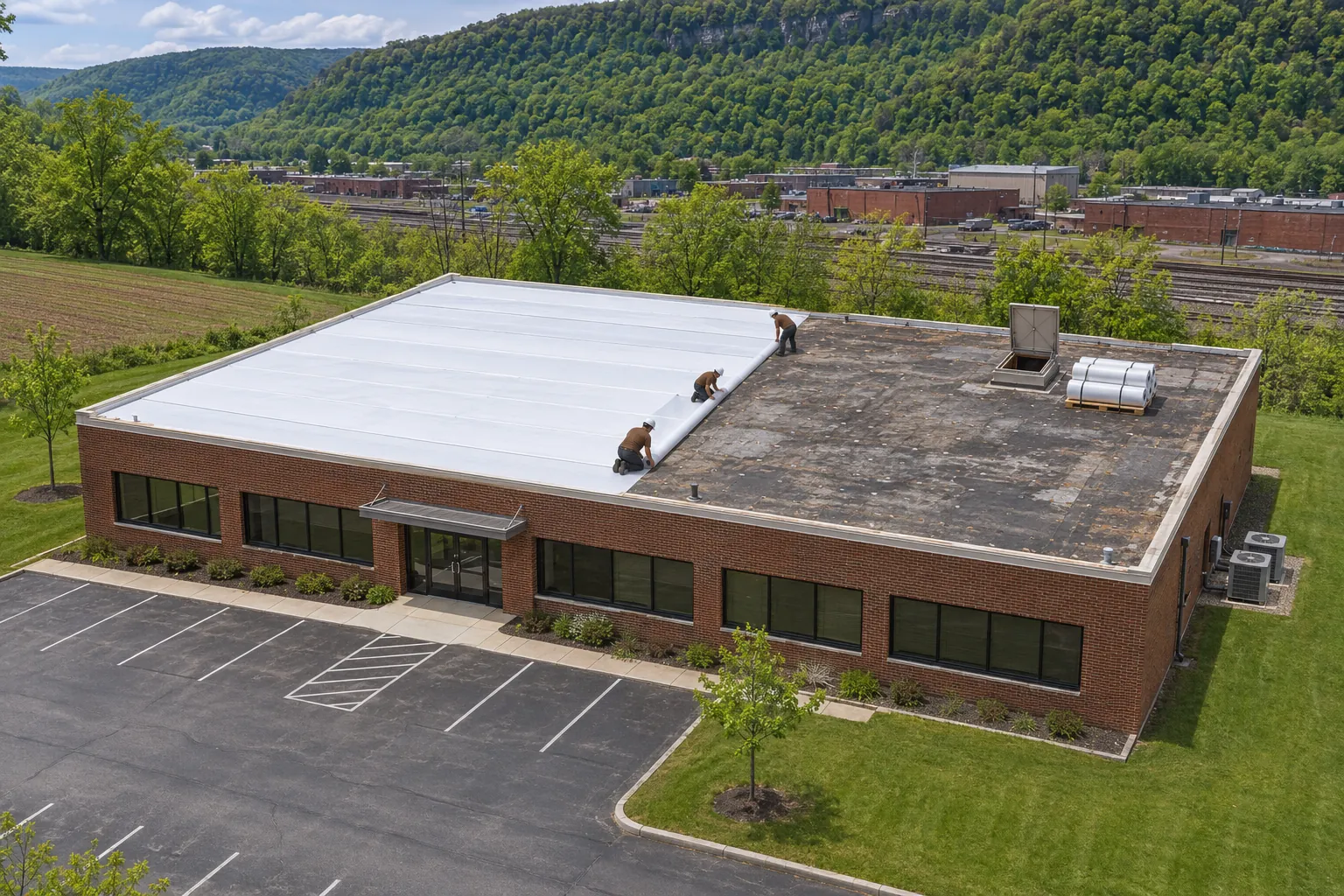
Drone view of a one-story brick office building half covered in new white TPO, with two roofers working at the seam line and wooded ridges and a rail yard behind

Ask About Your Own Roof

Call or book a roof walk, and we will answer it on site with the building in front of us.

Schedule Your Free Inspection

Commercial Metal Roof Questions Around Altoona

Retrofits over old roofs, what a price includes, fastener condition, and snow.

What should be investigated before adding metal above an old shop roof?

Adding metal above an old shop roof requires investigation of retained materials, moisture and the proposed support connections. We also review drainage and how increased height affects edges and equipment. The old assembly should not conceal unresolved deterioration, and the new panel system needs an installation plan that explains how loads reach adequate support.

What belongs in a commercial metal roof price beyond the panels?

A commercial metal roof price includes the complete assembly and the work needed to install it. Our inspection sets the building-specific price using roof size, system and thickness, insulation, tear-off layers, deck repair, edge metal, flashing, equipment, access, staging and season. Panel coverage alone leaves out complex transitions or the condition of supporting materials.

How does fastener condition affect a commercial metal roof's service life?

Fastener condition affects whether panels remain securely connected and whether their penetrations resist water entry. We inspect washers, holes and supporting connections as part of judging the roof's overall condition. Good panels do not establish remaining service life if attachment is failing, so maintenance and repair planning must consider the connection as well as the metal field.

Can a new metal roof be assumed to carry more snow than the old covering?

A new metal roof cannot be assumed to increase the building's snow-carrying capacity. We review the proposed assembly and identify where an appropriate structural assessment is needed before construction. Panels, connections and the supporting structure work together, so load questions for an existing commercial building need an answer beyond the choice of metal.

Weather, Moisture, and Permit Questions

Freeze-thaw at drains, heavy wet snow, hail claims, damp brick shops, and permit review.

Why should freeze-thaw damage near roof drains be addressed during reroofing?

Freeze-thaw damage near drains can reveal recurring moisture and drainage problems that belong in the reroof scope. We inspect the outlet connection and surrounding materials before rebuilding the area. Keeping the same depressed or deteriorated detail beneath new roofing can preserve the cause of the problem, even when the finished surface initially looks good.

Could heavy wet snow and iced gutters affect a church hall's replacement plan?

Heavy wet snow and iced gutters can affect access, drainage and the evaluation needed before a church hall reroof. We review observed distress and how meltwater leaves the roof before finalizing details. The plan should address problematic water routes while any uncertainty about structural capacity receives appropriate assessment separate from the choice of covering.

Does hail damage make a new commercial roof an insurance certainty?

Hail damage does not make replacement an insurance certainty; coverage depends on the policy and cause of damage. We inspect the roof to determine whether the physical findings support repairs or broader replacement. The owner can use that documented condition in the insurance discussion without confusing a roofing recommendation with a decision about coverage.

Can humidity in an older brick railcar shop influence the new roof assembly?

Humidity in an older brick railcar shop can influence insulation and moisture-control details in a new roof assembly. We investigate condensation evidence alongside actual roof leakage before recommending the construction. A reroof should account for the building's interior conditions, because replacing the exterior covering alone can leave dampness caused by air reaching cold surfaces.

What should an Altoona reroof proposal provide for permit review?

An Altoona, PA reroof proposal should describe the existing assembly, planned removal and new construction for the reviewing authority. Pennsylvania's Uniform Construction Code supplies the statewide code framework. We identify insulation, deck and equipment changes so project-specific review can address the actual scope before construction arrangements are finalized.

Questions From Johnstown, Indiana, Latrobe, DuBois, and Huntingdon

Equipment deliveries, closeout records, event access, drains, and tenant coordination.

Can a Johnstown repair shop plan reroofing around large equipment deliveries?

A Johnstown repair shop can plan reroofing around large deliveries when roof staging and delivery routes are coordinated early. We identify where overhead work or material handling limits access. The sequence should remain adaptable to weather and roof findings, because a delivery schedule alone does not establish when an opened roof section can be safely completed.

What should an Indiana warehouse retain from its completed roofing project?

An Indiana warehouse should retain the installed system information, roof layout and documented details needed for future maintenance. We identify materials and relevant access restrictions as part of closeout. Those records help later crews select compatible repairs and understand concealed work, instead of relying on the surface appearance to determine how the roof was assembled.

Can a Latrobe church hall reroof preserve access for scheduled events?

A Latrobe church hall reroof can preserve event access where entrances and occupied areas can be separated from active work. We review staging, overhead protection and the daily construction sequence with the building representative. Some restrictions can still be necessary, so event planning should follow the actual roof operation rather than assume all entrances remain available throughout.

How should a DuBois warehouse plan for drains during roof replacement?

A DuBois warehouse should include drains in the replacement scope rather than treat them as untouched accessories. We inspect the connections and surrounding slope, then coordinate the new roof details with existing drainage. Keeping outlets functional during construction also needs planning so temporary work does not leave an opened or completed section exposed to avoidable water accumulation.

Does a Huntingdon commercial owner need to coordinate roofing with its tenant?

A Huntingdon commercial owner should coordinate roof access, interior protection and operating restrictions with its tenant before work begins. We explain the proposed sequence so both parties understand the practical effect on the building. Their lease determines responsibilities, so they should check its terms while arranging the project rather than rely on a general roofing assumption.

Beyond the Altoona Commercial Roofing FAQ

A specific roof gets the best answer from a roof walk. Book an inspection or call, and we will look at the seams, drains, and flashing with you.

Call Us (814) 679-7043